End of Special Law for Ukrainians: What Changes on March 5th?
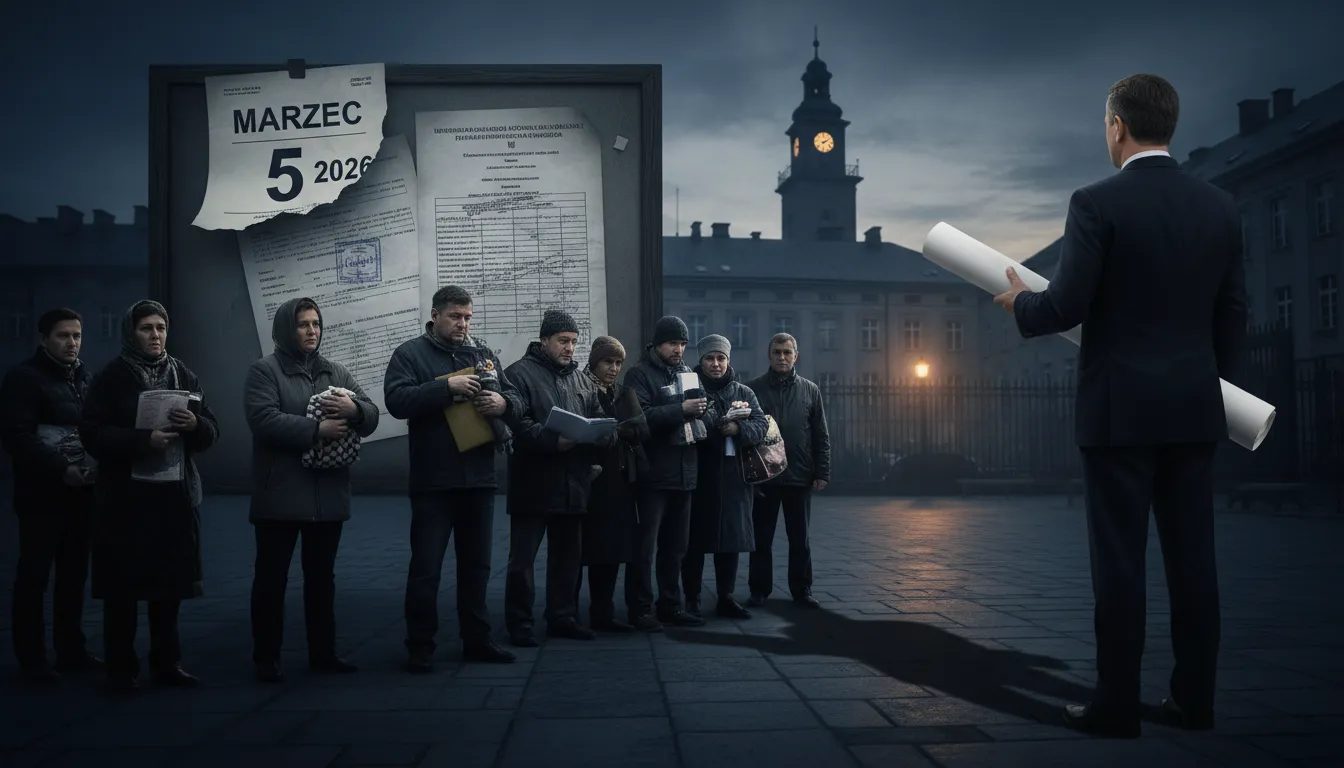
From March 5, 2026, Ukrainians in Poland will lose their special refugee status and fall under standard regulations for foreigners. President Nawrocki has signed a law ending four years of extraordinary protection, but it provides a year to regulate their status.
End of Special Protection After Four Years
A new legal framework for refugees from Ukraine will come into effect in Poland on March 5, 2026. President Karol Nawrocki signed a law on February 19th repealing the special law of 2022 – a regulation introduced in the first weeks of the full-scale Russian invasion, which for four years provided Ukrainians with simplified access to residence, work, benefits, and education. From now on, almost a million Ukrainian citizens in Poland will be covered by the standard law on foreigners.
A Year to Regulate Status
The law contains a crucial transitional buffer: the residence rights of current beneficiaries of the special law are automatically extended until March 4, 2027. This is the time for Ukrainians to regulate their status under standard procedures for foreigners. However, individuals with a PESEL number marked with 'UKR' must confirm their identity at the municipal office with a valid travel document by August 31, 2026, otherwise they will lose temporary protection.
The operation of the Diia.pl platform, the mObywatel application, and simplified business registration procedures remain unchanged.
What Disappears, What Remains
The most important changes concern the social sphere. Free accommodation and meals will be limited exclusively to vulnerable groups – people with disabilities, single seniors, and families in crisis. People who have previously used collective accommodation and do not belong to these groups will be able to remain there until June 30, 2026, to become self-sufficient.
In the field of education, additional Polish language lessons, increased limits on overtime hours for teachers, and free school transport will be maintained until the end of the 2025/2026 school year. After that, schools will return to standard regulations.
The 800+ child benefit for Ukrainian families will be conditional on employment – its payment will be conditional on the employment of the guardian.
2.7% of GDP – An Impressive Balance Sheet
The debate about the consequences of this decision takes place in the shadow of impressive economic data. According to a Deloitte report prepared for UNHCR, Ukrainian refugees generated as much as 2.7% of Poland's GDP in 2024 – over PLN 100 billion of added value. The employment rate among refugees of working age reached 69%, slightly below 75% for Poles. The authors of the report estimate that removing even half of the labor market barriers could bring an additional PLN 6 billion per year.
Concerns of Experts and NGOs
The government justifies the reform with growing social tensions and the principle of equal treatment for all foreigners. However, critics point to serious threats. Non-governmental organizations, including Pallium for Ukraine, warn that people from the most vulnerable groups – the seriously ill, those dependent on medical equipment – may face a tragic choice: staying in unsuitable conditions or returning to Ukraine despite the ongoing Russian invasion.
Economic experts, in turn, point to the risk of an outflow of workers. Ukrainians today constitute a significant part of those employed in trade, healthcare, logistics, and services.
Tension with EU Law
There is also a legal dimension. The EU Council's implementing decision of July 2025 extended temporary protection for Ukrainian refugees until March 4, 2027 – a year longer than the Polish repealing law provides. The government in Warsaw argues that key protection instruments have been transferred to the new system, not removed. The European Commission will have to assess whether Polish regulations are fully compliant with EU obligations.
The new regulations close an era of extraordinary solutions and pose a fundamental question: has Poland built a sufficiently efficient integration system to carry out this difficult legal transfer for almost a million people without harm?