How Harmful Algal Blooms Form—and Why They're Spreading
Harmful algal blooms—explosive growths of toxic algae—shut down beaches, poison drinking water, and kill fish. Here's the science behind why they form, what makes them dangerous, and why climate change is making them worse.
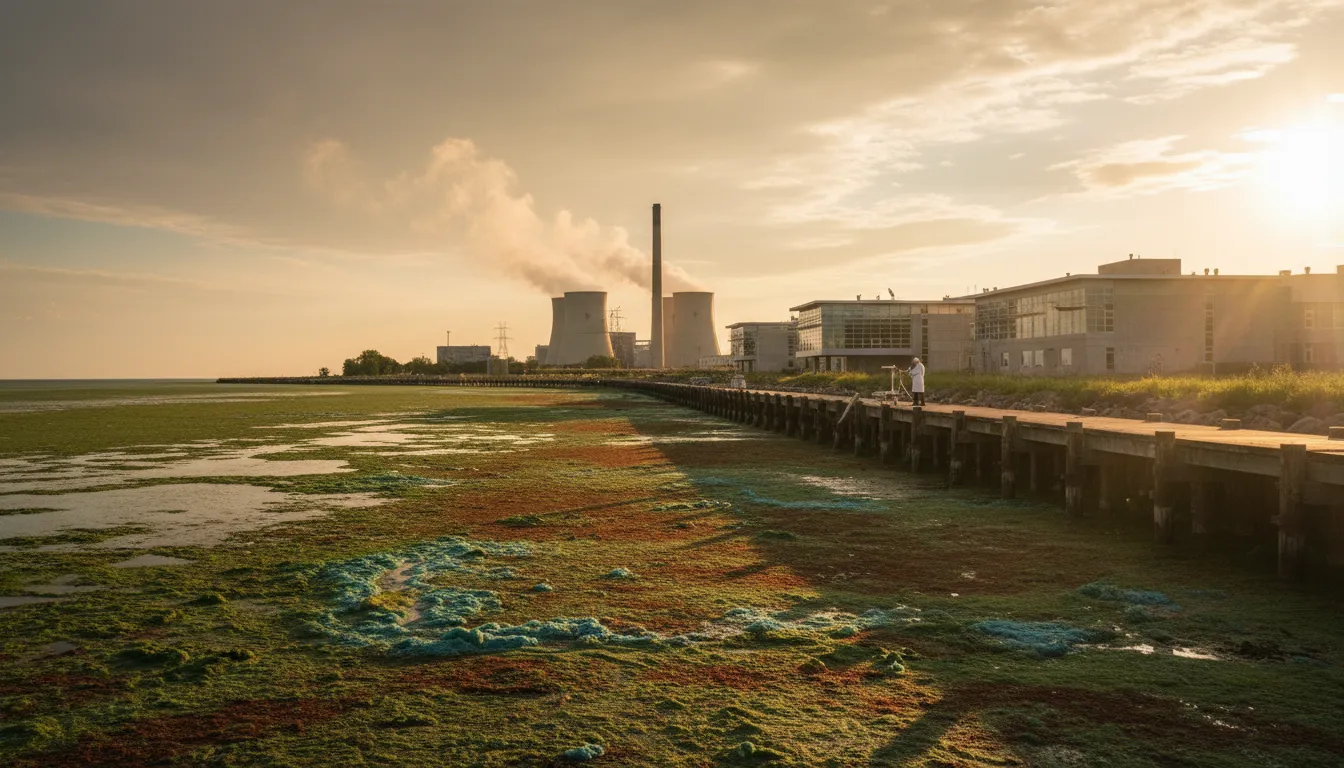
When the Water Turns Green—or Red
Every summer, coastal towns post warnings at beaches. Lakes go thick and green. Fisheries close. Sometimes, tap water becomes unsafe to drink. The culprit is almost always the same: a harmful algal bloom, or HAB—an explosive, uncontrolled growth of algae or cyanobacteria that releases toxins dangerous to humans, animals, and entire ecosystems.
HABs are not new. But they are becoming more frequent, more severe, and harder to contain. Understanding how they form—and why they're spreading—has become one of the more urgent questions in environmental science.
What Exactly Is an Algal Bloom?
Algae are microscopic, plant-like organisms that exist naturally in virtually every body of water on Earth. Under normal conditions, they form a critical base of the aquatic food chain. A bloom occurs when environmental conditions trigger rapid, unchecked growth—sometimes doubling a population in a single day.
Not all blooms are harmful. The harmful designation applies when the organisms produce toxins, deplete oxygen in the water, or grow in such density that they physically block sunlight and suffocate aquatic life. According to NOAA's National Ocean Service, HABs can occur in fresh, marine, and brackish water on every continent.
The two main biological culprits are:
- Cyanobacteria (blue-green algae) — the primary cause of freshwater HABs. Despite the name, these are actually bacteria, not true algae. They produce toxins including microcystins, which damage the liver, and neurotoxins that can kill dogs within hours of exposure.
- Dinoflagellates and diatoms — microscopic marine phytoplankton responsible for most ocean HABs, including the infamous "red tide" caused by Karenia brevis off Florida's Gulf Coast.
The Perfect Storm: What Triggers a Bloom
Three conditions, acting together, turn a healthy aquatic environment into a toxic soup:
- Excess nutrients — primarily nitrogen and phosphorus from agricultural fertilizer runoff, sewage discharge, and urban stormwater. When these nutrients pour into lakes and coastal waters, they act as fertilizer for algae.
- Warm, calm water — algae thrive in warm temperatures and struggle to bloom in cold or turbulent conditions. Still, stratified water allows them to accumulate near the sun-lit surface.
- Abundant sunlight — photosynthesis fuels explosive growth when light is plentiful and nutrients are not limiting.
The US Environmental Protection Agency describes this combination—nutrient overload plus the right weather—as the core mechanism behind most HAB events in the United States.
The Damage They Do
The consequences extend far beyond green-tinted water. The Centers for Disease Control and Prevention documents HABs as a public health hazard capable of causing gastrointestinal illness, neurological symptoms, skin irritation, and in severe cases, liver failure in humans exposed to contaminated water or shellfish.
For wildlife, the impact can be catastrophic. Blooms consume oxygen as they decompose, creating dead zones—hypoxic stretches of water where fish and invertebrates suffocate. Toxins bioaccumulate up the food chain, harming dolphins, sea turtles, and seabirds that feed on contaminated prey.
Economically, the toll is substantial. Researchers at the Woods Hole Oceanographic Institution estimate HABs cost the U.S. economy at least $82 million per year on average—with single catastrophic events running far higher. Florida's 2018 red tide was linked to roughly $2.7 billion in tourism losses for coastal communities. In 2014, a bloom in Lake Erie left more than half a million residents in Toledo, Ohio without safe drinking water for two days.
Climate Change Is Accelerating the Problem
Scientists are increasingly concerned that global warming is stacking the deck in algae's favor. Warmer surface water temperatures extend the growing season for cyanobacteria and push bloom conditions into regions previously too cold to support them. A 2025 study published in Communications Earth & Environment found that warming and freshening coastal waters are likely to increase HAB frequency at high latitudes—areas that had historically been spared.
The National Institute of Environmental Health Sciences notes that changing precipitation patterns—more intense storms followed by droughts—amplify nutrient runoff into waterways, further fueling bloom conditions. The IPCC's Special Report on the Ocean and Cryosphere became the first major IPCC document to directly link HABs to climate change as a systemic threat.
Can Blooms Be Prevented?
No single solution exists, but the most effective interventions target the nutrient problem at its source: reducing fertilizer use near waterways, upgrading wastewater treatment infrastructure, and restoring wetland buffers that absorb runoff before it reaches open water. NOAA operates a national HAB monitoring system using satellite imagery, ocean buoys, and field sampling to issue forecasts—similar in concept to weather prediction—giving coastal communities days of warning before toxin levels become dangerous.
As long as warming continues and nutrient pollution persists, harmful algal blooms will remain one of the clearest and most costly intersections of environmental degradation and public health. The green tide is a symptom—of agriculture, of climate, of how water systems respond when pushed too far.