How the U.S. Secret Service Works—and Why It Exists
The Secret Service began as a counterfeit-fighting agency in 1865 and evolved into the world's most recognized protective force. Here's how its layered security operations keep presidents safe.
Born to Fight Counterfeiting, Not Protect Presidents
The United States Secret Service is synonymous with presidential protection—dark suits, earpieces, and agents willing to take a bullet. Yet the agency was never created for that purpose. On April 14, 1865, President Abraham Lincoln signed legislation establishing the Secret Service Division within the Department of the Treasury. Its sole mission: suppress the rampant counterfeiting that threatened to destabilize the post-Civil War economy, when an estimated one-third to one-half of all circulating currency was fake.
It took three presidential assassinations—Lincoln, James Garfield, and William McKinley—before Congress finally assigned the Secret Service full-time responsibility for protecting the president in 1901, during the Theodore Roosevelt administration. That dual mandate—protecting national leaders and safeguarding the nation's financial infrastructure—persists to this day.
Who Gets Protection
Federal law (18 U.S.C. § 3056) defines who qualifies for Secret Service protection. The list includes the president, vice president, their immediate families, the president-elect and vice president-elect, former presidents and their spouses, major presidential candidates and their spouses, and visiting foreign heads of state. Former presidents receive lifetime protection, a benefit restored by Congress in 2013 after a brief period when it was limited to ten years after leaving office.
Layers of Defense
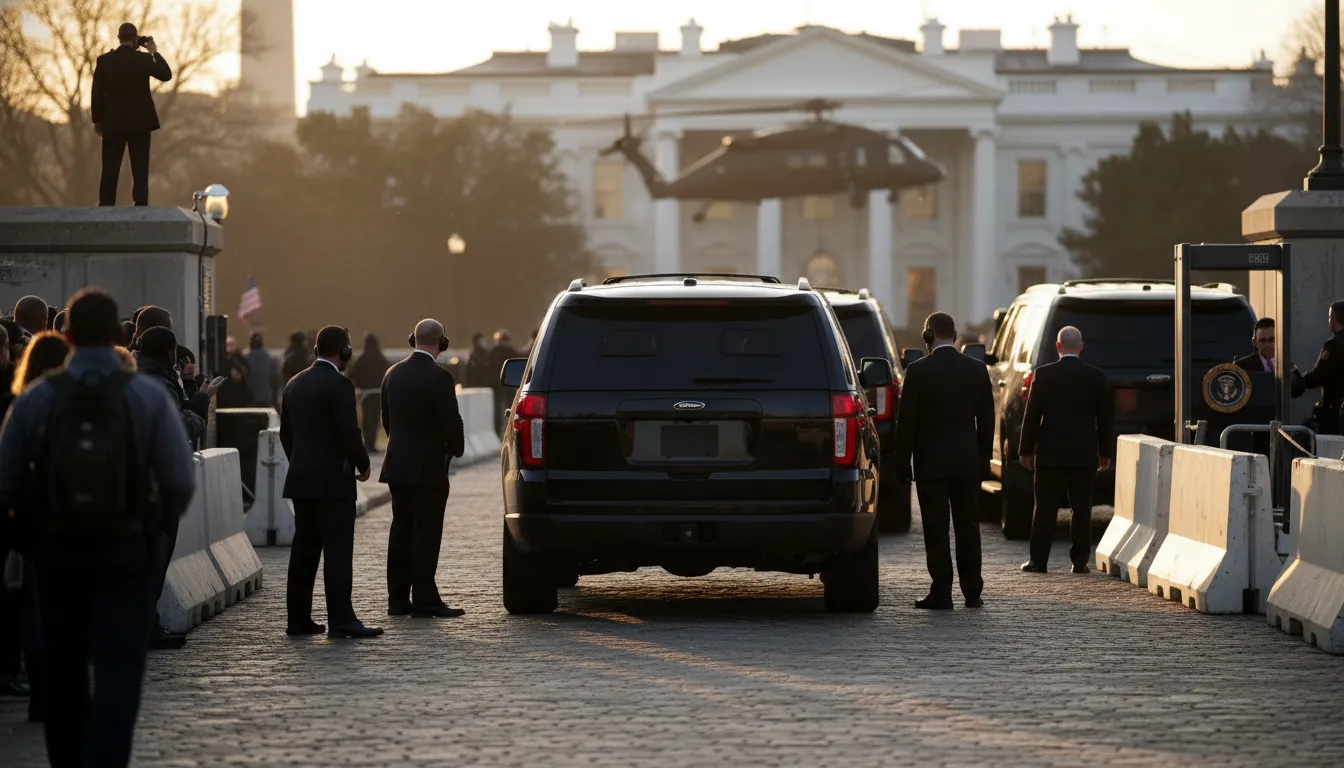
Protecting a president goes far beyond surrounding them with armed agents. The Secret Service builds a multi-layered security perimeter around every protectee and every venue they visit.
- Inner perimeter: Senior agents from the protectee's personal detail operate closest to the individual, ready for immediate evacuation.
- Middle perimeter: Agents drawn from local field offices serve as "post-standers," controlling access points and monitoring crowd flow.
- Outer perimeter: Local and state law enforcement officers, called "counterparts," secure the broader area.
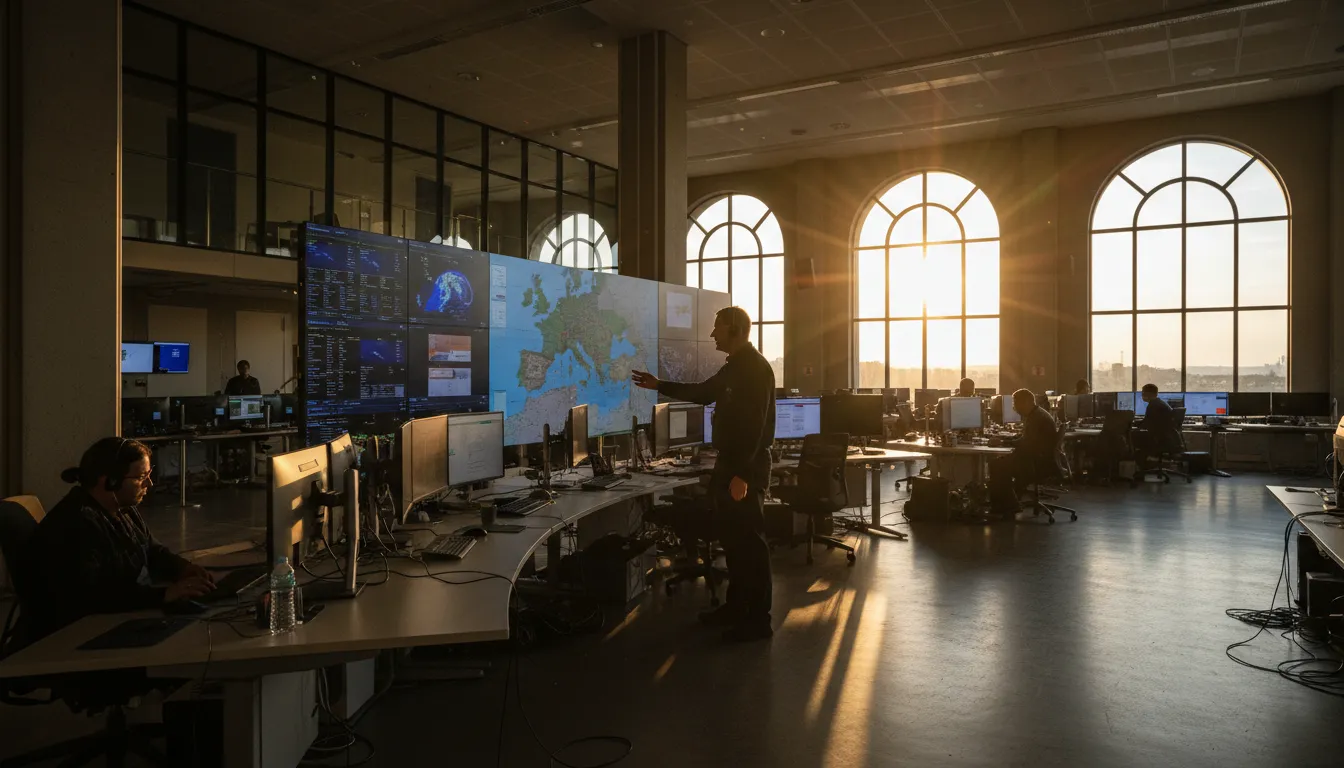
Before any public appearance, an advance team spends days—sometimes weeks—surveying the site. Senior agents conduct three to four walk-throughs, hold multiple briefings, and quiz every officer on their specific objectives. The security plan covers airspace restrictions, counter-surveillance, medical emergency response, hazardous agent detection, and magnetometer screening.
Specialized Tactical Units
The Secret Service's Special Operations Division fields several elite teams. The Counter Sniper Team provides long-range observation and precision marksmanship, typically deploying in pairs—a spotter and a shooter—on rooftops overlooking event venues. These agents must qualify shooting out to 1,000 yards every month; those who fail do not travel or work assignments.
The Counter Assault Team (CAT) serves as a heavily armed tactical response unit, trained to engage direct attacks and buy time for the protective detail to evacuate the president. The Emergency Response Team within the Uniformed Division guards the White House complex around the clock.
By the Numbers
The Secret Service employs approximately 3,200 special agents, 1,300 Uniformed Division officers, and more than 2,000 technical and professional staff—roughly 8,000 personnel in total. Its annual budget reached approximately $3 billion in fiscal year 2024, with about $1.2 billion directed specifically toward protective operations, according to CBS News.
Despite this scale, the agency regularly coordinates with dozens of federal, state, and local agencies for any presidential movement—transforming routine travel into a massive interagency operation.
The Financial Mission Lives On
While protection dominates headlines, the Secret Service still investigates financial crimes including counterfeiting, bank fraud, wire fraud, identity theft, and cybercrime targeting financial institutions. The agency's investigative division works closely with the Department of Homeland Security, under which the Secret Service has operated since 2003, when it transferred from the Treasury Department as part of post-9/11 government reorganization.
From its origins chasing counterfeiters in the ashes of the Civil War to its modern role coordinating counter-sniper teams and airspace closures, the Secret Service remains one of the most consequential—and least understood—agencies in the federal government.