How Zoning Laws Drive Up Home Prices
Restrictive single-family zoning covers roughly 75% of residential land in America and is a primary driver of the housing shortage and affordability crisis — but a wave of state-level reforms is beginning to change that.
A Hidden Driver of the Housing Crisis
The typical American home now costs around $400,000 — well beyond what the median family can comfortably afford. Economists, urban planners, and policymakers across the political spectrum increasingly agree on a major culprit: local zoning laws. These largely invisible regulations, embedded in municipal codes across the country, have constrained the supply of housing for decades and artificially inflated prices in nearly every major city.
What Is Zoning?
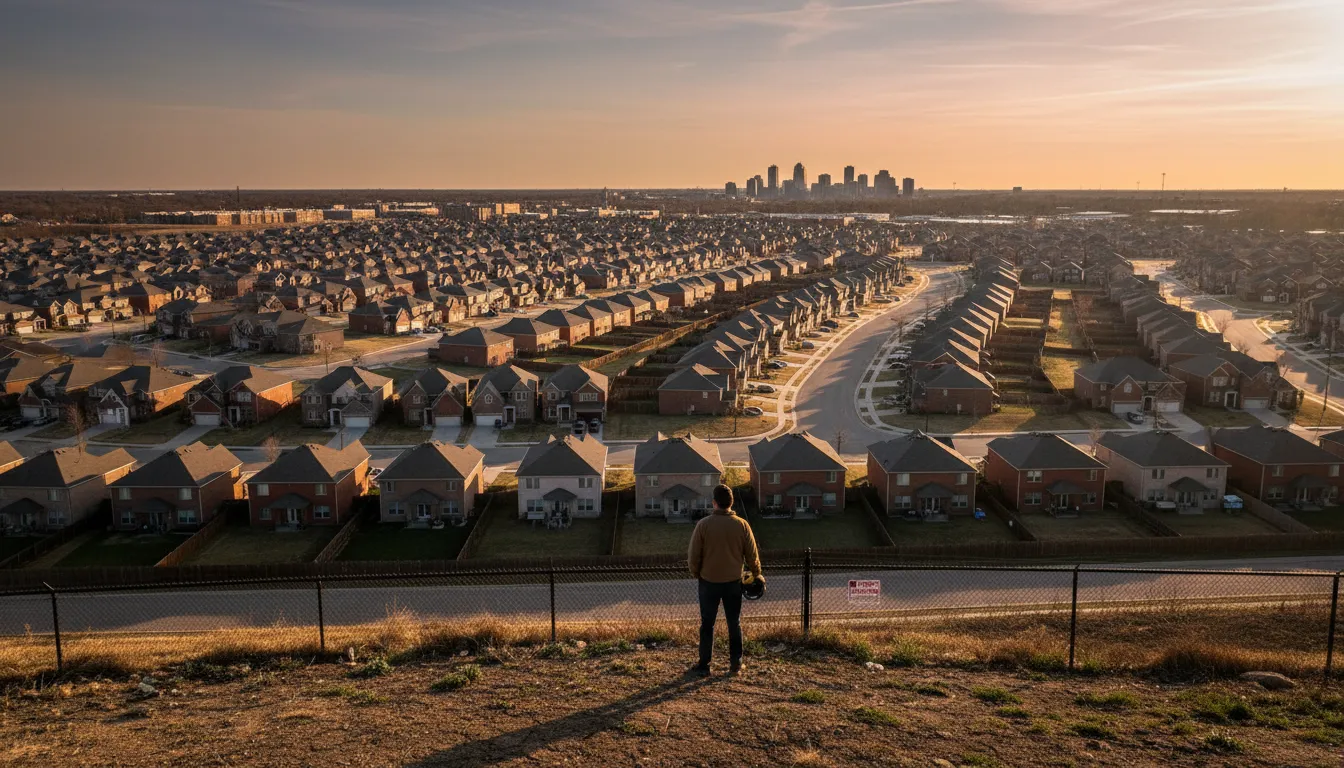
Zoning is the legal process by which local governments divide land into designated use categories — industrial, commercial, and residential. Within residential areas, the most restrictive and widespread form is single-family zoning, which prohibits anything other than a detached, one-household home on a given parcel of land. Apartments, duplexes, townhouses, and other multi-unit buildings are simply illegal to build in these zones — regardless of demand.
According to research from CNN Business and urban planning experts, approximately 75% of residential land in the United States is zoned for single-family homes only. In cities like San Jose and Charlotte, that figure exceeds 90%.
Where Single-Family Zoning Came From
The practice traces back to 1916 in Berkeley, California, where it was used in part to exclude minority-owned businesses and residents from white neighborhoods. It spread rapidly after the Supreme Court endorsed land-use zoning in Village of Euclid v. Ambler Realty Co. (1926). Although explicit racial zoning was later struck down, single-family zoning effectively achieved similar results by pricing out lower-income households and concentrating wealth in certain areas.
By the post-World War II era, single-family zoning had become the default template for suburban development across the country — a model built around the assumption that each household would own a car, a lawn, and a detached home.
How Restricted Zoning Inflates Prices
When land is legally limited to one home per parcel, the supply of housing cannot keep pace with population growth. The result is a fundamental imbalance: too many people competing for too few homes, which drives prices higher. Researchers call this artificial inflation the "zoning tax."
A 2021 study cited by the Harvard Joint Center for Housing Studies estimated the zoning tax in San Francisco at over $400,000 per house. In Los Angeles, New York, and Seattle, it reached up to $200,000. Even in mid-sized cities like Chicago and Philadelphia, restrictive zoning added up to $80,000 to the cost of a home.
The United States now faces a housing supply gap of more than 4 million units, according to estimates from Realtor.com and Zillow — a deficit built up over more than a decade of underbuilding that even aggressive construction would take seven or more years to close.
The "Missing Middle" Problem
One of the most concrete consequences of single-family zoning is the disappearance of what urban planners call "missing middle" housing — duplexes, triplexes, townhouses, and small apartment buildings that sit between a detached house and a large apartment complex. These building types are common in older city neighborhoods built before modern zoning codes, but in most of America they cannot legally be built today.
Missing middle housing is often more affordable than detached homes, requires less land, and fits naturally into existing neighborhoods. Yet zoning laws have effectively made it illegal for most of the country.
The Reform Wave
A growing bipartisan movement is pushing back. Oregon became the first state to effectively end single-family zoning statewide in 2019, passing legislation that required cities to allow duplexes and, in larger cities, up to four-unit buildings. Within three years, multi-family construction in Portland jumped — middle housing accounted for 26% of new residential units approved in the city, according to OPB reporting.
California, Washington, Montana, and Maine have passed similar reforms. Minneapolis became the first major U.S. city to eliminate single-family zoning entirely in 2019. The results so far suggest that allowing more housing types reliably increases supply and moderates rent growth.
At the federal level, the U.S. Senate passed the 21st Century ROAD to Housing Act in March 2026 — the largest housing affordability package in decades — which includes incentives for localities to remove regulatory barriers and expand manufactured and modular housing options.
Why It Matters Beyond Affordability
The consequences of restrictive zoning extend well beyond home prices. Research shows that exclusionary zoning limits economic mobility by cutting off lower-income families from neighborhoods with better schools and job opportunities. It also worsens urban sprawl, increases car dependency, and contributes to longer commutes and higher carbon emissions.
Reforming zoning is not a silver bullet — construction costs, labor shortages, and financing barriers also play a role in the housing crisis. But without changing the legal framework that determines what can be built where, no other policy can fully address the imbalance between housing supply and demand.