India Opens Landmark AI Summit, First in Global South
The AI Impact Summit 2026 opens in New Delhi with over 20 world leaders and top tech CEOs, marking the first major global AI gathering hosted in the developing world and signaling India's ambition to shape AI governance.
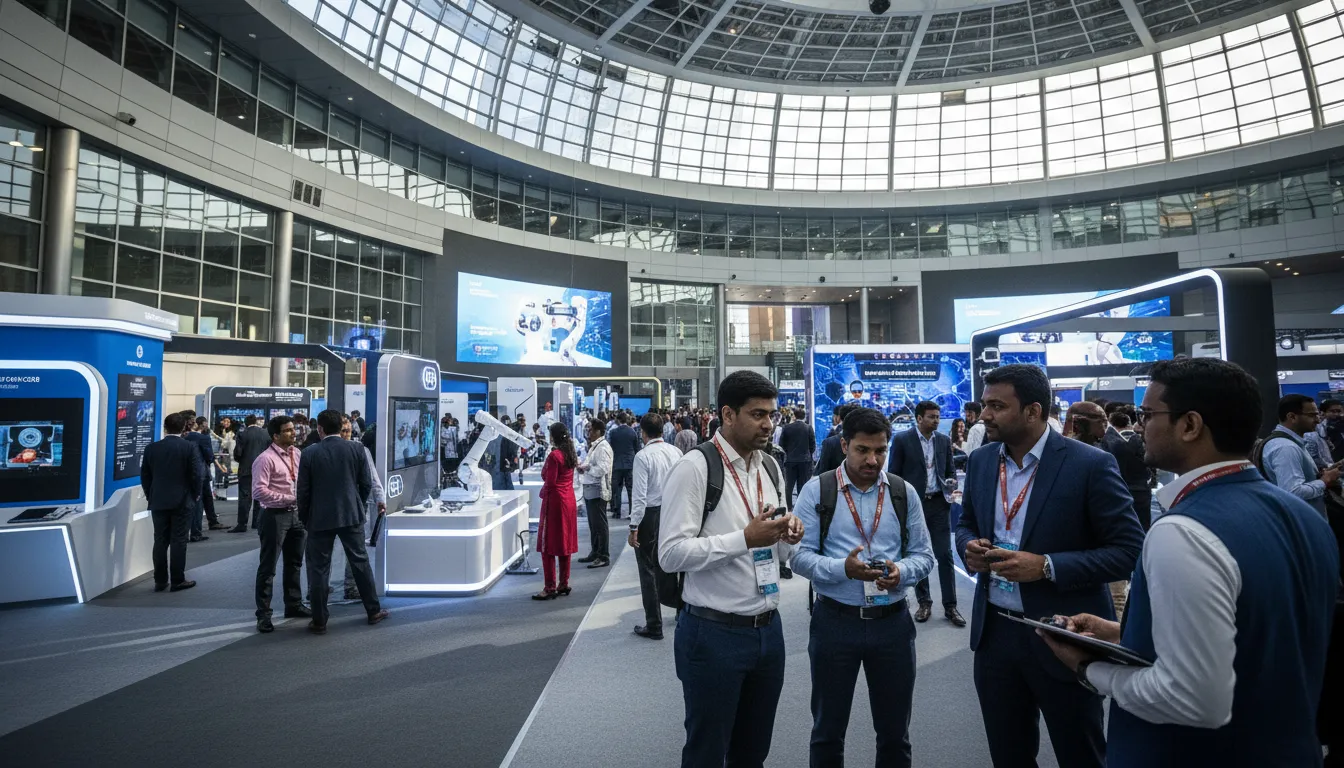
New Delhi Takes the Global AI Stage
India launched the AI Impact Summit 2026 on February 16 at Bharat Mandapam in New Delhi, opening a five-day programme that brings together more than 20 heads of state, ministerial delegations from over 45 countries, and chief executives of the world's most powerful technology companies. Prime Minister Narendra Modi inaugurated the accompanying AI Impact Expo, which features over 300 exhibitors from 30 countries across 13 national pavilions.
The gathering is the first major global AI summit hosted in the Global South, a distinction that underscores India's determination to ensure developing nations have a seat at the table as artificial intelligence reshapes economies and societies worldwide.
From Safety Talk to Real-World Impact
The summit follows a series of international AI convenings held in the United Kingdom, South Korea, France, and Rwanda. But where previous gatherings centred on safety and governance principles, India has deliberately shifted the conversation toward implementation and measurable outcomes. Organisers anchored the agenda around three pillars they call "sutras" — People, Planet, and Progress — reflecting a push to move AI beyond laboratory breakthroughs into tangible public benefit.
According to the Crowell & Moring analysis, the shift represents a "strategic evolution from previous convenings to move beyond governance and safety-focused dialogues, to one that drives implementation and measurable outcomes."
Day One: AI for Road Safety and Beyond
The opening day featured a dedicated session on AI for road safety, examining how data-driven crash pattern analysis and risk prediction tools can make mobility systems safer — an acute concern for India, which accounts for a disproportionate share of global road fatalities. Other first-day sessions tackled AI in agriculture, judicial systems, workforce transformation, and culturally grounded approaches to AI adoption.
A global competition called HER First Algorithm, run in partnership with NITI Aayog's Women Entrepreneurship Platform, spotlighted women technologists creating AI solutions for public challenges.
Tech Titans and World Leaders Converge
The summit's attendee list reads like a who's-who of global power and technology. French President Emmanuel Macron, Brazilian President Luiz Inácio Lula da Silva, and UN Secretary-General António Guterres are among the political leaders present. On the industry side, Google CEO Sundar Pichai, OpenAI CEO Sam Altman, Microsoft President Brad Smith, Qualcomm CEO Cristiano Amon, and Meta's Yann LeCun are all participating.
Major investment announcements accompanied the opening. Yotta Data Services and Nvidia unveiled plans for a significant AI GPU expansion in India, including an order of 8,000 Nvidia Blackwell GPUs worth an estimated $1.5 billion. India aims to grow its installed GPU capacity from 38,000 to 100,000 by the end of 2026 under the government's IndiaAI Mission.
Governance Framework and Global Ambitions
India used the summit to unveil AI governance guidelines built on seven principles: trust, people-first governance, innovation over restraint, fairness and equity, accountability, understandability by design, and safety. The framework recommends establishing an AI Governance Group, a Technology and Policy Expert Committee, and an AI Safety Institute.
Organisers expect a non-binding "New Delhi Declaration" rather than formal treaties. Yet the summit's deeper significance may lie in its symbolism: by hosting the largest AI gathering ever staged in the developing world, India is positioning itself as a bridge between advanced economies and the Global South, arguing that AI must serve the billions, not just the privileged few.