Pakistan and Afghanistan: Open War and Global Risk
Pakistan has declared open war on the Afghan Taliban government following airstrikes on Kabul and Kandahar. The escalation of the conflict threatens regional stability and will hinder the international fight against terrorism.
Bombs Over Kabul: How the War Began
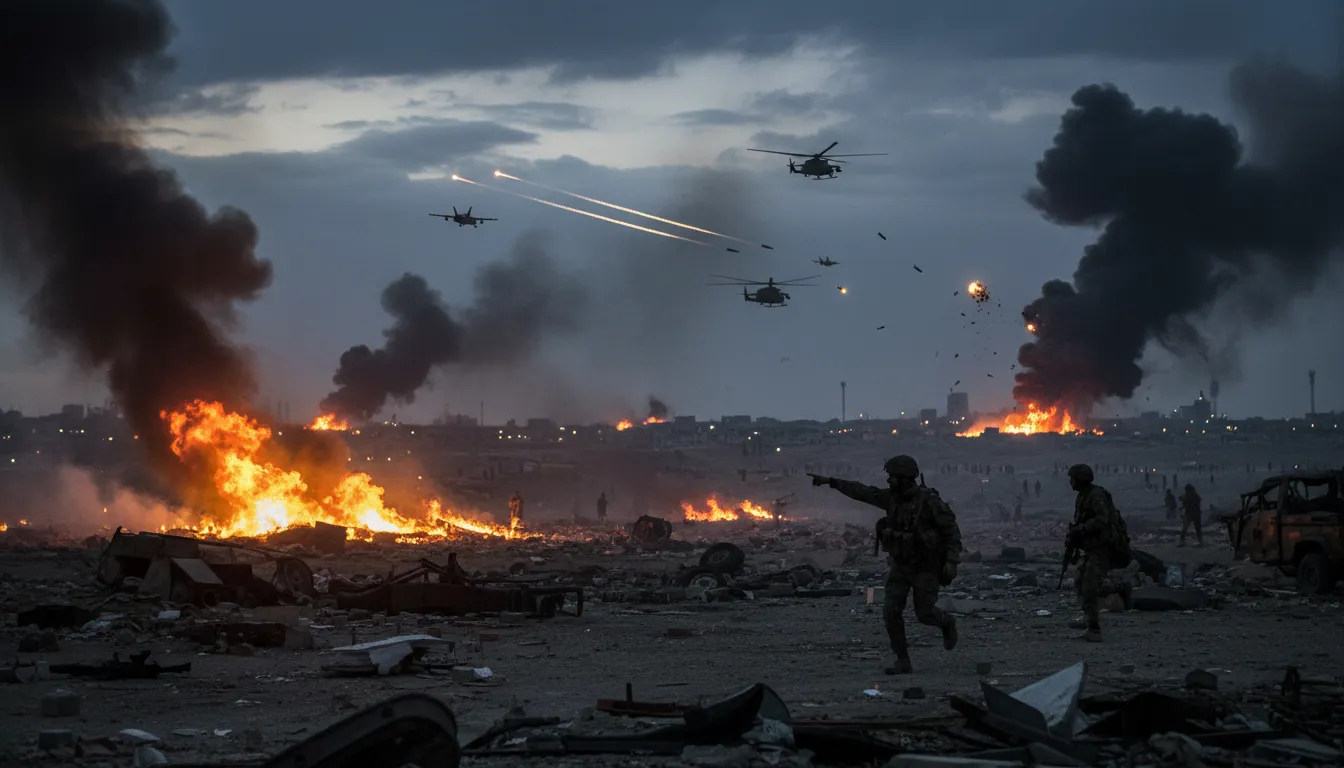
On Thursday, February 27, 2026, the Pakistani Air Force carried out massive strikes on Kabul, Kandahar, Jalalabad, and Paktia province. Pakistani Defense Minister Khawaja Asif promptly declared that his country was entering into an "open war" with the Afghan Taliban government – Pakistan's patience had run out. The operation was codenamed Ghazab Lil Haq, meaning Righteous Wrath, and immediately followed an Afghan cross-border offensive in which Afghan forces attacked Pakistani border posts along the disputed Durand Line, claiming to have destroyed 19 Pakistani military positions.
Conflicting Casualty Figures
Both sides have released dramatically different casualty figures. Islamabad claims that 274 Afghan fighters were killed and another 400 wounded in the airstrikes and ground clashes; it admits its own losses of 12 soldiers killed and 27 wounded. The Afghan Taliban government, on the other hand, reports 55 Pakistani soldiers killed and others captured. Al Jazeera and other independent media have not been able to verify these figures. There are also serious reports of civilian casualties – the Afghan side accuses Pakistan of bombing a residential building in Jalalabad and a religious school in Paktika province.
Historical Roots: The Durand Line and the TTP
The core of the dispute dates back to 1893, when the British colonial administration demarcated the Durand Line as the border between British India and Afghanistan, dividing Pashtun tribes in half. Afghanistan has never formally recognized this demarcation. Pakistan has long accused Kabul of allowing its territory to be used as a base for Tehrik-e-Taliban Pakistan (TTP) – the Pakistani branch of the Taliban – and for Islamic State Khorasan (IS-K), which regularly attack Pakistani targets. The TTP has sworn allegiance to the Afghan Taliban, so Kabul can hardly take action against it without jeopardizing its own internal cohesion, analysts at the CSIS center point out.
International Appeals for a Ceasefire
UN Secretary-General António Guterres called on both sides for an immediate ceasefire and expressed deep concern about the impact on civilians. Iran offered to mediate dialogue and called on governments to respect territorial integrity. China, Russia, Turkey, and Saudi Arabia have taken their own mediation steps. British Foreign Secretary Yvette Cooper appealed for rapid de-escalation and resumption of mediated negotiations. The European Union also warned against destabilizing the entire Central Asian region.
Security Implications: Terrorism and Nuclear Risk
CSIS analysts warn that a prolonged conflict is likely to reduce pressure on Islamic State Khorasan (IS-K), allowing it to strengthen. IS-K – responsible for a number of attacks with global reach – could fill the power vacuum created by the destabilization of both countries. The Czech Republic, which actively participated in NATO's Afghan missions in past decades, is following the situation with concern. The fact that Pakistan is a nuclear power adds extremely serious global consequences – any uncontrolled escalation thus takes on an existential dimension. The conflict also threatens new waves of migration to Europe from a region that has been the source of serious humanitarian crises in the recent past.
Outlook: Diplomacy or a Deepening Crisis?
In October 2025, Qatar and Turkey brokered a fragile ceasefire that was broken in February 2026. International pressure is now mounting, but both sides are so far sticking to their positions. According to CSIS analysts, the key to de-escalation is a three-pronged approach: targeted action by Pakistan exclusively against the TTP instead of a blanket war with Kabul, international pressure on the Taliban government to crack down on militant bases, and the involvement of a third party in monitoring any agreements. Without these measures, the border war threatens to turn into a permanent source of instability with far-reaching global impacts.