Spain Activates Economic Shield in Response to Gulf Crisis
The government of Pedro Sánchez plans to approve a package of fiscal and labor measures on March 17 to contain rising gasoline and electricity prices stemming from the closure of the Strait of Hormuz and the conflict in the Middle East.
An Urgent Decree for Tuesday, March 17
The Council of Ministers is scheduled to approve an emergency economic package next Tuesday, March 17, to cushion the impact of the Persian Gulf energy crisis on Spanish households and businesses. Pedro Sánchez's executive branch is working against the clock on a decree-law that, according to government sources, contemplates essentially fiscal measures to contain the soaring price of electricity and fuel, which has skyrocketed following the effective closure of the Strait of Hormuz as a result of military attacks by the United States and Israel on Iran.
Economy Minister Carlos Cuerpo confirmed that the government has a «consensus on the positive effect» of the instruments used during the 2022 energy crisis—when the VAT on electricity was reduced to 10% and the tax on electricity generation was suspended—and that these same mechanisms will serve as a framework for the current measures. Second Deputy Prime Minister Yolanda Díaz added that the decree will prohibit dismissals for energy-related reasons and facilitate access to temporary layoff schemes (ERTE) for companies experiencing difficulties due to rising fuel costs.
The Impact of the Strait of Hormuz on Prices
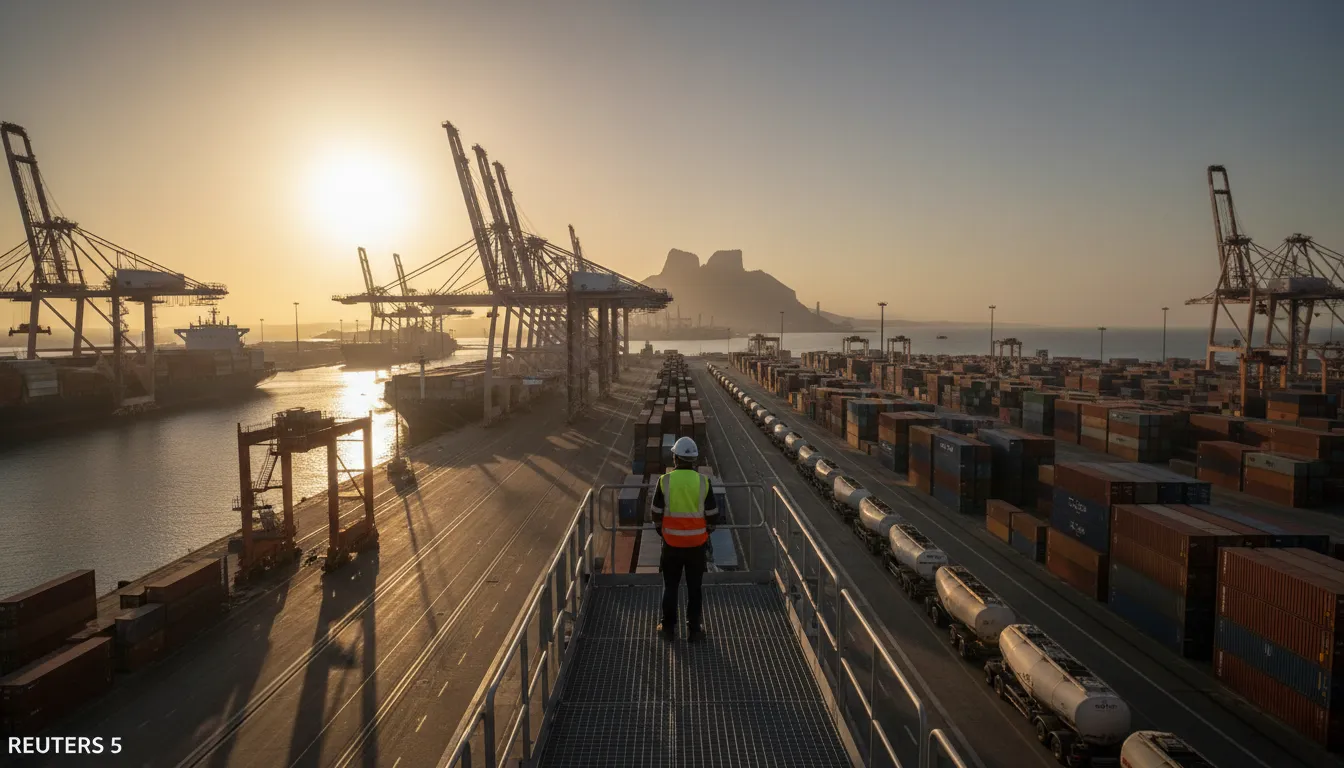
The closure of the Strait of Hormuz—through which approximately 20% of the world's oil passes—has sent Brent crude above $100 a barrel, albeit with high volatility. In Spain, the effects at the pump are already palpable: gasoline has accumulated an increase of about 15 cents per liter, and diesel, about 28 cents since the beginning of the conflict, according to data released by specialized media. The average price of unleaded gasoline was approaching 1.815 euros per liter in early March, its highest level in three months.
The crisis is not limited to fuels. The closure of Hormuz is also pushing up the prices of fertilizers, sulfur, and other industrial inputs that circulate along that route, with direct consequences for the agricultural sector and the food chain. European stock markets have accumulated declines of more than 5% since the beginning of the crisis, with the STOXX 600 index recording its worst streak in several months.
The Four Pillars of the Package of Measures
The executive branch has structured the decree into four blocks:
- Professional Fuels: specific aid for road transport and the agricultural sector, the most exposed to the price of diesel.
- Energy Taxation: reduction of VAT on electricity and possible suspension of the tax on electricity generation, replicating the 2022 model.
- Labor Protection: activation of temporary layoff schemes (ERTE) for energy-related reasons, prohibition of dismissals linked to the crisis, and access to the RED mechanism for reduced working hours.
- Structural Measures: promotion of renewable energies and electrification of the economy to reduce dependence on imported oil.
Consumer organizations OCU and Facua also demand a broader reduction of VAT on fuels and the elimination of the special tax on hydrocarbons, which represents about 50% of the final price at the pump.
Strategic Reserves as the First Line of Defense
Spain activated its participation in the historic coordinated release of strategic reserves led by the International Energy Agency (IEA), which was joined by around 32 countries. The country will contribute 11.5 million barrels from its reserves, enough to cover about 12 days of consumption. In total, Spain maintains approximately 420 million barrels stored in 120 deposits distributed throughout the national territory, which guarantees 92 days of autonomous supply.
An Economy at Risk of Losing Momentum
The moment is especially delicate for Spain. In 2025, the country recorded GDP growth of 2.9%, the highest among the major economies of the European Union, driven by private consumption, investment, and a booming tourism sector. However, as one of the main European importers of liquefied natural gas (LNG), Spain is particularly vulnerable to disruptions in global supply routes.
The opposition—both the Popular Party and Vox—demands more ambitious measures and has announced a debate in the Congress of Deputies next week. From Sumar, a government partner, a broader «social shield» is requested to protect the most vulnerable sectors. The government, for its part, insists that it will act «when appropriate» and with the proportionality required by the evolution of the markets.