What Is the Coup Belt—Africa's Chain of Juntas
Three Sahel nations—Mali, Burkina Faso, and Niger—fell to military coups in rapid succession. Here's how the Coup Belt formed, why juntas replaced democracies, and what it means for regional stability.
A Region Seized by Soldiers
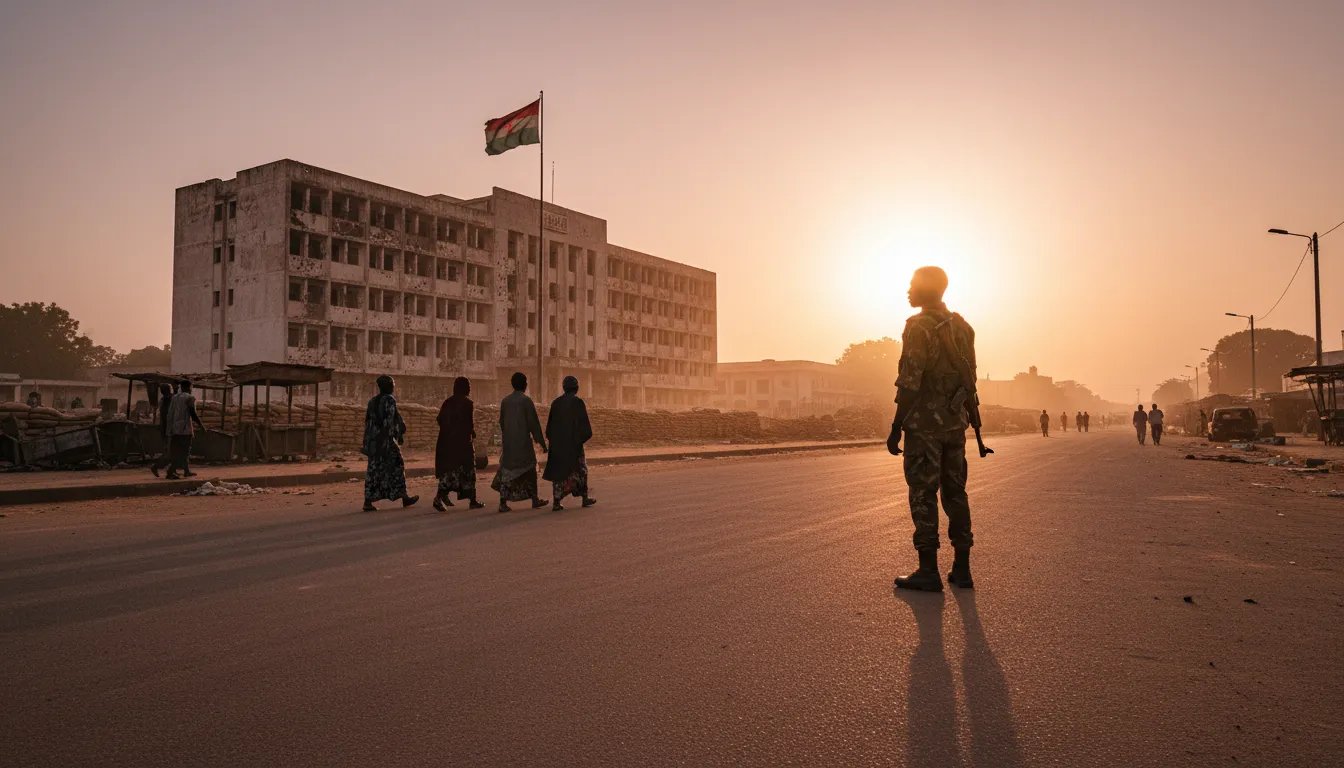
Between 2020 and 2023, three West African nations experienced military takeovers in quick succession. Mali fell first, with coups in August 2020 and May 2021. Burkina Faso followed with two coups in January and September 2022. Niger completed the chain in July 2023. The result is what analysts now call the Coup Belt—a band of landlocked Sahel states stretching across Africa's midsection, all governed by military juntas that overthrew elected leaders.
Nearly three-quarters of all coup attempts worldwide since 2020 have taken place in West Africa or the Sahel, despite the region accounting for less than 10 percent of Africa's states. Understanding why requires looking at decades of insurgency, colonial legacies, and a dramatic geopolitical realignment.
Why the Coups Happened
The immediate trigger in each case was the same: military officers frustrated by their governments' inability to contain jihadist insurgencies that have ravaged the region since 2012. Groups linked to al-Qaeda and the Islamic State have killed thousands and displaced millions across the Sahel, and civilian governments were seen as corrupt and ineffective.
But deeper resentments also played a role. France, the former colonial power, had maintained a heavy military and financial presence through Operation Barkhane and the CFA franc currency system. Anti-French sentiment surged as security deteriorated despite years of foreign intervention. Coup leaders tapped into this anger, casting themselves as liberators from both jihadist violence and neocolonial influence.
Guinea-Bissau's February 2025 coup underscored that the pattern is spreading. As the Harvard International Review noted, dissatisfied militaries across the region share a common playbook: seize power, blame the previous government, and promise elections that rarely materialize.
The Alliance of Sahel States
Rather than returning to civilian rule, the three core juntas deepened their partnership. In September 2023, Mali, Burkina Faso, and Niger signed a mutual defense pact that became the Alliance of Sahel States (AES). In January 2024, they announced their withdrawal from ECOWAS, the 15-member Economic Community of West African States that had threatened military intervention to reverse Niger's coup.
The split carries serious economic consequences. As landlocked nations, all three depend on coastal ECOWAS neighbors for port access. Without the bloc's free-trade provisions, imports become more expensive and exports less competitive. The United States Institute of Peace has warned that the divorce risks destabilizing coastal West Africa as well, disrupting established trade routes and transit corridors.
Russia Steps In as the West Steps Out
The juntas expelled French and American military forces and turned instead to Moscow. The Wagner Group, the Russian mercenary outfit, deployed to Mali and other Sahel states starting in 2021. After Wagner chief Yevgeny Prigozhin's death in 2023, the Russian government absorbed the operation into a new entity called Africa Corps, which now provides military training, equipment, and combat support to the junta governments.
According to the International Crisis Group, Africa Corps operates with a smaller footprint than Wagner but is more directly controlled by Moscow's defense ministry. The arrangement gives Russia access to mineral resources and strategic influence while the juntas gain a security partner with no conditions attached on democracy or human rights.
The Jihadist Threat Grows
Despite the military takeovers—and partly because of them—the insurgency has worsened. Jama'at Nusrat al-Islam wal-Muslimin (JNIM), al-Qaeda's main Sahel affiliate formed in 2017, has expanded its territory and intensified attacks. The group earns an estimated $18 to $35 million annually through extortion and kidnapping, and its recorded violent incidents have more than doubled between 2021 and 2022.
JNIM operates a decentralized model, enforcing strict Islamic law and collecting taxes in areas it controls while targeting military installations and civilian leaders. The Tuareg separatist movement in northern Mali adds another layer of instability, with the Azawad Liberation Front periodically clashing with both the junta and jihadist groups.
What Comes Next
The Coup Belt represents more than a regional security crisis. It is a test case for whether military rule can succeed where democracy and foreign intervention failed—and early evidence suggests it cannot. Civilian casualties continue to rise, democratic freedoms have shrunk, and the juntas show little interest in holding promised elections. For the 70 million people living under military rule across these three nations, the soldiers who promised salvation have yet to deliver it.