2026 Home Trends: Invisible Tech and Sustainable Luxury
In 2026, the most sophisticated homes hide their intelligence entirely. From walls that double as speakers to AI-driven climate systems, the year's dominant design themes are invisible technology, sustainable craftsmanship, and deeply personal spaces.
Technology Disappears — and That Is the Point
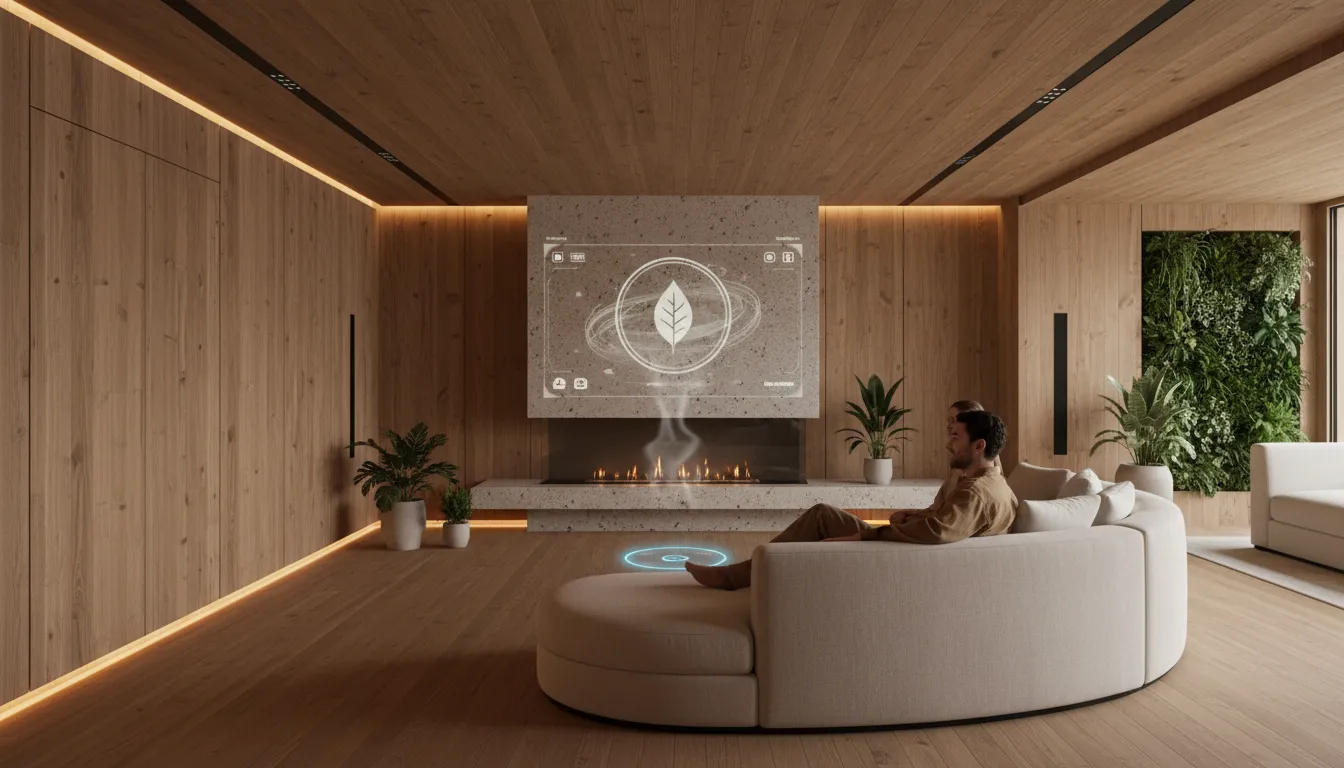
The living room of 2026 contains no visible screens, no protruding thermostats, no blinking status lights. Yet it knows when you enter, recalls your preferred temperature and lighting mood, and fills the space with concert-quality sound from walls that appear to be solid plaster. This is no longer a concept — it is the defining aesthetic reality shaping interior design this year.
According to the 2026 Global Luxury Interior Design Report, "invisible technology" has become the ultimate status symbol in high-end residential design. Where prestige once meant larger screens and more visible gadgetry, homeowners now invest in the opposite: smart infrastructure that vanishes into walls, ceilings, and custom cabinetry.
Speakers are no longer wall-mounted — transducer systems vibrate sound directly through drywall, turning entire ceilings into audio surfaces. Televisions give way to laser projectors concealed in ceiling joists, projecting onto motorized artwork panels that retract on demand. Climate hardware runs silently behind custom marble facades. The technology remains state-of-the-art; what changes is that you cannot see it.
AI Learns the Household Routine
The concealment of technology is matched by its growing intelligence. Smart thermostats and adaptive lighting systems in 2026 no longer require manual input — they learn from occupant behavior and adjust proactively. According to Madbrick Studio's 2026 design analysis, AI tools now support space utilization modeling, lighting simulation, and material combination testing before a single wall is touched.
Lighting has been particularly transformed. Systems can now function as full circadian rhythm managers, shifting from energizing cool blues in the morning to warm amber tones by evening — without user intervention. The design implication is significant: rooms no longer need multiple visible switches, bulky dimmers, or control panels.
Quiet Luxury Pushes Back Against Fast Furniture
Running parallel to the invisible-tech wave is a quieter revolution in materials and craftsmanship. Houzz's 2026 home design survey identifies a clear backlash against disposable furniture culture. Homeowners are choosing natural stone, aged wood, and hand-crafted metal pieces that improve with time rather than degrade with use.
This "quiet luxury" philosophy prioritizes traceable origins — buyers want to know where their marble slab was quarried, who wove their textile, and whether the timber was sustainably sourced. The emphasis on lifecycle value over short-term aesthetics has elevated local artisans and small-batch makers in a market previously dominated by mass-produced flat-pack furniture.
Sustainability is no longer an optional add-on. Energy-efficient systems, responsible material sourcing, and layouts designed for longevity now feature in renovation briefs from the outset, not as afterthoughts.
Personalization Replaces Universal Formulas
The third pillar of 2026 design is hyper-personalization. According to Madbrick Studio, luxury has shifted away from opulence at scale toward individual relevance — interiors that reflect specific routines, habits, and comfort preferences of the people who inhabit them.
Houzz reports that warm earth tones — sage, terra cotta, olive — have replaced stark minimalist whites as the neutral palette of choice, precisely because they respond differently to each home's unique light conditions and architecture. Multifunctional rooms that adapt to remote work, wellness practices, and family life are now standard requests in renovation briefs.
A New Definition of the Sophisticated Home
Together, these three forces — invisible technology, sustainable craftsmanship, and personal relevance — signal a maturation in how people think about their homes. The most sophisticated residence of 2026 is not the most automated or the most expensive. It is the one that feels completely effortless, lasting, and unmistakably yours.