2026 Municipal Elections: France Votes Under New System
This Sunday, March 15th, French citizens head to the polls for the first round of the 2026 municipal elections, the first election organized under the new proportional representation system with a majority bonus. In Paris, Lyon, Marseille, and hundreds of medium-sized cities, tonight's results will shape the alliances for the second round on March 22nd.
A Historic Election for 50,000 Communes
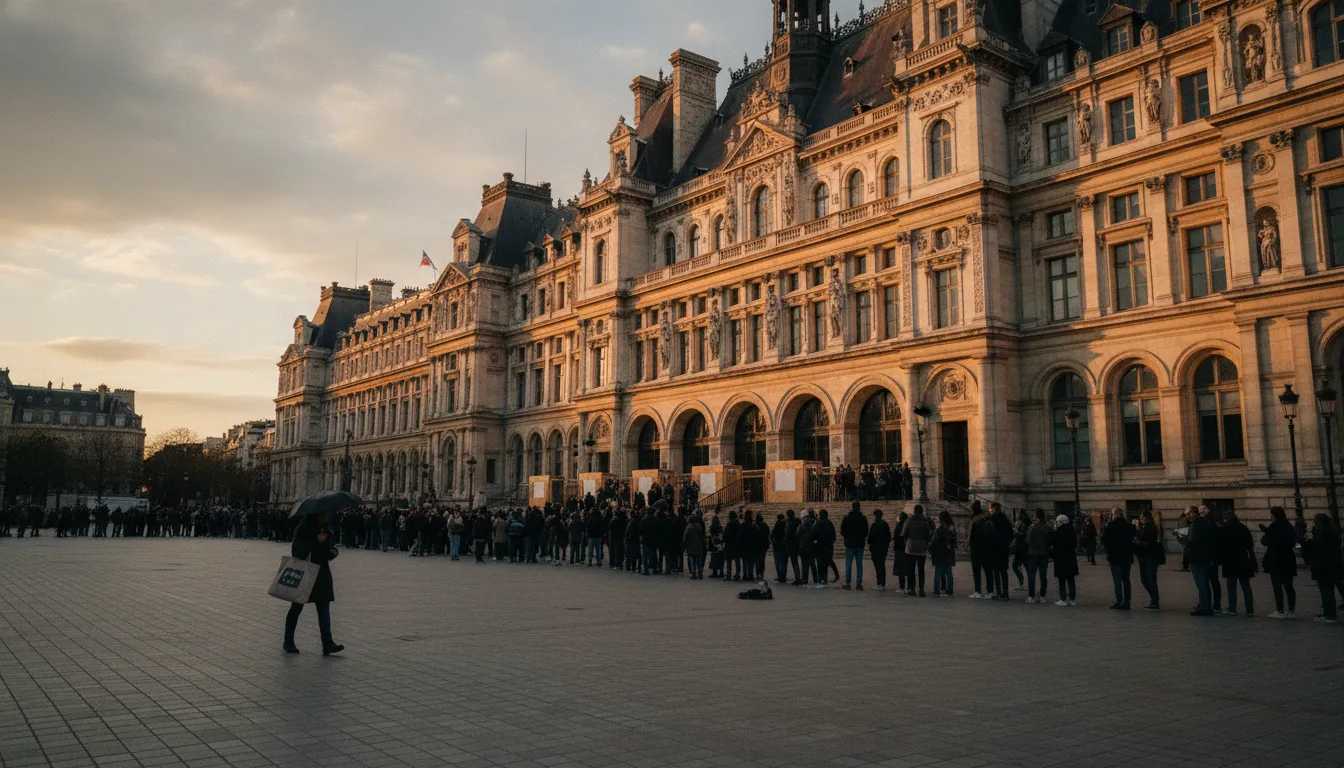
This Sunday, more than 900,000 candidates, spread across 50,478 lists, are submitting themselves to the verdict of the ballot box for the first round of the municipal elections. This election holds particular significance: for the first time in the history of the Republic, all of France's communes, regardless of size, are applying the same voting method. The law of May 21, 2025, has unified the rules by imposing a proportional list system with gender parity and a majority bonus, ending the dichotomy between small communes—previously subject to multi-member plurality voting—and the others.
Specifically, the list that comes out on top immediately wins half of the seats to be filled. The rest are distributed proportionally among all lists that have crossed the 5% threshold. This reform also aims to strengthen gender parity: in small communes, female representation only reached 38% under the old system.
Paris: A Tense Left-Right Duel
The capital is the focus of all eyes. With Anne Hidalgo not running for re-election after two terms, five candidates are fiercely vying for her succession. According to the latest polls, Emmanuel Grégoire, the outgoing first deputy mayor supported by a PS-Écologistes-PCF-Place Publique union, is receiving approximately 33% of voting intentions, ahead of Rachida Dati (LR-MoDem) at 27%.
Behind this leading duo, three candidates are likely to have an impact in the second round: Sarah Knafo (Reconquête) at 12%, Pierre-Yves Bournazel (Horizons) at 12%, and Sophia Chikirou (La France insoumise) at 10%. The Rassemblement National list, led by Thierry Mariani, is not expected to exceed 4%, effectively marginalizing it in the capital.
Campaign issues—security, cleanliness, mobility—have crystallized strong opposition. Alliances in the second round are expected to be decisive: Knafo has offered to "extend a hand" to Dati, who categorically refuses.
Marseille and Lyon: Possible Surprises
In Marseille, the scenario is potentially explosive. The outgoing Socialist mayor, Benoît Payan, is only credited with a two-point lead over the RN candidate, Franck Allisio (35% against 33%). A shift to the far right in France's second-largest city would constitute a major political earthquake.
In Lyon, the situation is clearer: Jean-Michel Aulas, an emblematic figure in French sport now engaged in politics within a right-wing coalition, is significantly ahead of the outgoing Green mayor, Grégory Doucet (45% against 31%). A change of majority seems likely.
Abstention, the Candidates' Primary Opponent
All observers agree on one point: abstention could reach record levels. In 2020, already marked by the pandemic, the municipal elections recorded nearly 55% abstention in the first round. Current polls do not suggest a massive mobilization. In this context, the vote reserves of the lists that are better established locally could make the difference.
The Rassemblement National is establishing itself as a third force in many medium-sized cities, threatening historical strongholds of the left or the republican right. The configuration of the triangular or quadrangular contests in the second round on March 22nd will largely depend on the transfer of votes between lists.
Tonight, the First Trends
Polling stations close at 8 p.m. in the major cities. The first estimates will be known in the evening. One thing is certain: if no list obtains an absolute majority of the votes cast—which would be a first in many communes—March 22nd will be the real moment of truth for the recomposition of the French local political landscape.