Cuba: Ten Days of Protests Shake the Regime
Cuba marks its tenth consecutive day of mass protests on March 16, 2026, with pot-banging demonstrations, barricades, and fires erupting amid blackouts lasting up to 19 hours and an unprecedented food crisis. Díaz-Canel admits to talks with Washington and releases 51 political prisoners.
The Island in Turmoil
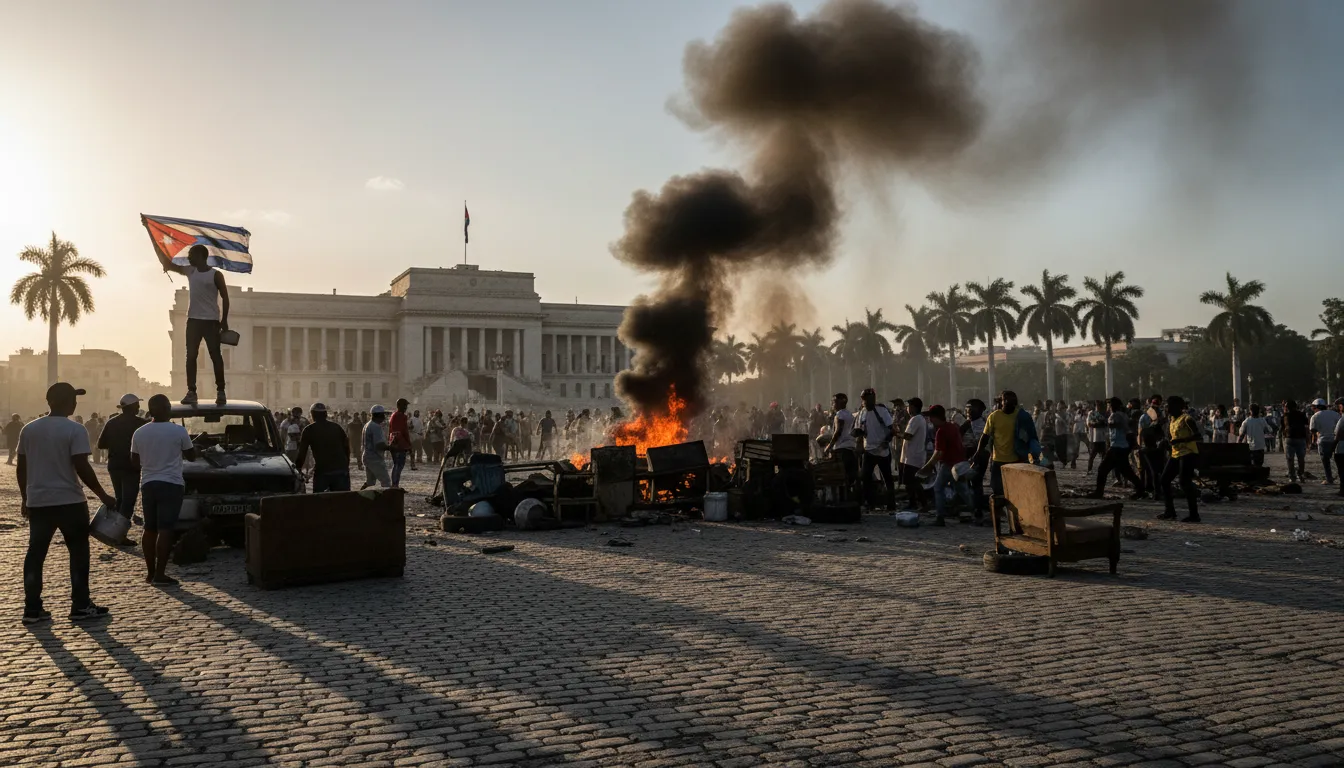
Cuba awoke on Monday, March 16, 2026, to its tenth consecutive day of widespread protests, the most intense since the historic uprising of July 11, 2021. In several neighborhoods of Havana—Nuevo Vedado, Lawton, Diez de Octubre—citizens once again banged pots, erected barricades, and set fire to garbage in the streets, fed up with blackouts that last up to 19 hours a day and a food shortage that has reached desperate levels, according to reports from Al Jazeera and NPR.
The Energy Collapse
The immediate trigger is an unparalleled electrical catastrophe. The Cuban national grid is registering a deficit of 1,930 megawatts, leaving 61% of the island without power overnight. On Monday, the system suffered a total disconnection, the third major blackout in four months, according to CNN. Authorities managed to restore electricity to only 5% of Havana customers—about 42,000 homes—and several hospitals, with warnings that the circuits could fail again.
The energy crisis has structural roots: aging infrastructure, lack of spare parts, and, above all, the disruption of Venezuelan oil supplies. Díaz-Canel himself acknowledged that Cuba has not received crude oil shipments in three months, exacerbating the dependence on thermoelectric plants nearing the end of their useful life.
Protests Burning Party Headquarters
The most violent episode occurred in Morón, in the province of Ciego de Ávila, where hundreds of protesters—mostly young people—stormed and set fire to the municipal headquarters of the Communist Party, taking files, computers, and furniture out into the street to burn them. Police opened fire on the protesters, injuring at least one person, and arrested five citizens, according to CNN en Español. President Díaz-Canel acknowledged the "social unrest" but warned that "there will be no impunity for vandalism and violence."
Diplomatic Shift: Washington and the Vatican
Faced with mounting pressure, the regime executed a double move of openness. On the one hand, Díaz-Canel publicly confirmed that Cuban officials are holding talks with representatives of the Trump administration to identify avenues of understanding and reduce bilateral confrontation. On the other, he announced the release of 51 political prisoners, presented as a gesture of goodwill following a negotiation mediated by the Vatican, according to CNN en Español and Infobae.
However, Amnesty International denounced the use of prisoners "as bargaining chips in a political game" and demanded the immediate and unconditional release of all those detained for political reasons.
The View from Spain and the Diaspora
Spain is following the development of the crisis with particular attention. With more than 160,000 Cuban residents registered according to the INE—and a much larger community in an irregular situation—the Iberian country is the main European destination for the Cuban diaspora. In Madrid, gatherings in front of the Puerta del Sol have expressed solidarity with the protesters on the island. Exiled organizations warn that a worsening of repression could trigger new waves of migration to Europe, in a context in which more than one million Cubans have left the country since 2021, reducing the effective population of the island to between 8.6 and 8.8 million people.
Inflection Point?
Analysts consulted by various international media outlets agree that the combination of sustained protests, energy collapse, and unprecedented diplomatic openness places Cuba at a decisive moment. The question looming over Havana—and over the foreign ministries of Madrid, Washington, and Vatican City—is whether the regime has real room to reform or whether the pressure from the streets will end up exceeding its capacity for control.