How Bone Remodeling Works—and Why Bones Weaken
Your skeleton completely rebuilds itself every decade through a process called bone remodeling. Understanding how osteoblasts and osteoclasts maintain bone strength explains why osteoporosis develops and how new treatments aim to stop it.
A Living, Breathing Skeleton
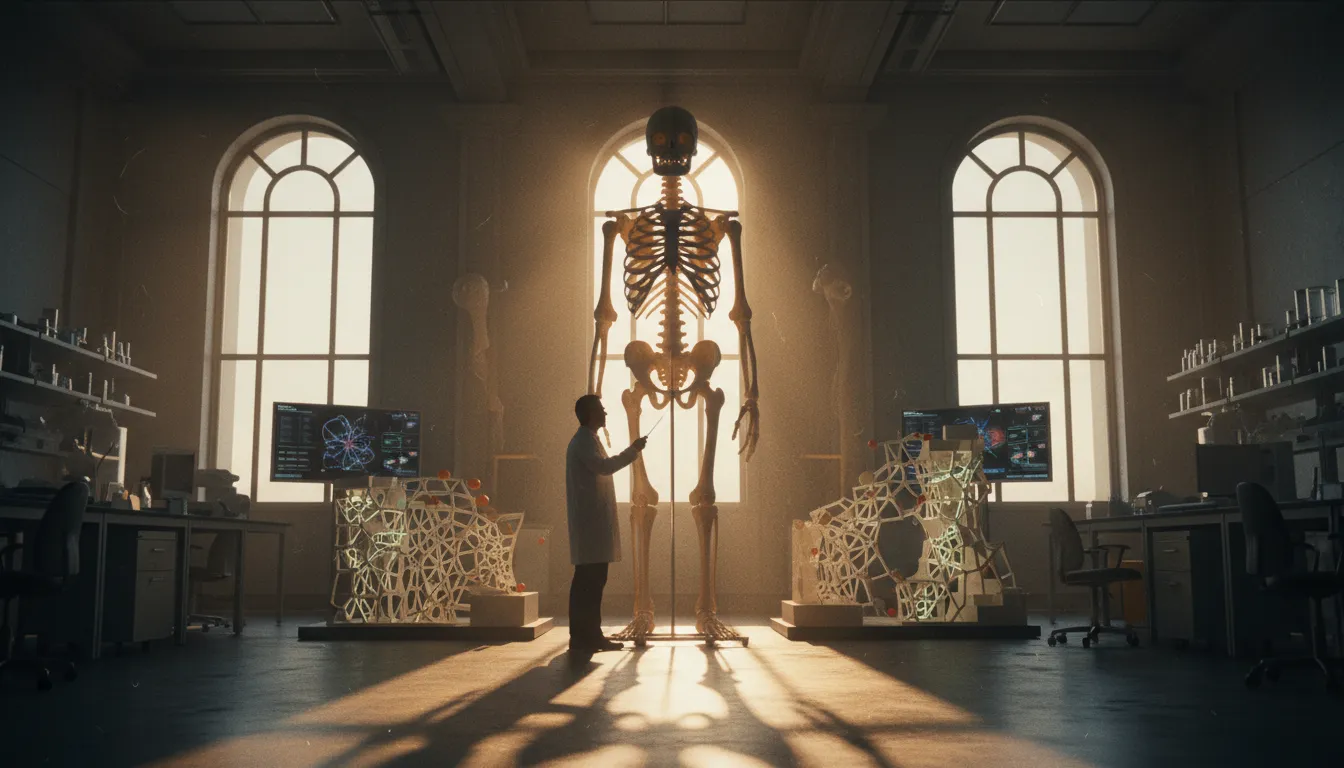
Most people think of bones as static scaffolding—hard, dry, and unchanging. In reality, the human skeleton is one of the most dynamic organs in the body. Every decade or so, it replaces itself almost entirely through a process called bone remodeling. This constant cycle of destruction and renewal keeps bones strong, repairs microscopic damage, and releases essential minerals into the bloodstream.
When the system works, it is remarkably efficient. When it doesn't, bones become thin, porous, and fragile—a condition called osteoporosis that affects an estimated 200 million people worldwide and causes more than 10 million hip fractures each year in people over 55, according to the International Osteoporosis Foundation.
Two Cells, One Balancing Act
Bone remodeling depends on two specialized cell types locked in a perpetual tug-of-war:
- Osteoclasts break down old or damaged bone. These large, multinucleated cells originate from the same blood-cell lineage as white blood cells. They attach to a bone surface, seal off a tiny area, and dissolve both the mineral crystals and the protein matrix using acids and enzymes.
- Osteoblasts build new bone. Derived from stem cells in the bone marrow, they move into the cavities left by osteoclasts and deposit a fresh protein matrix—primarily collagen—which then hardens as calcium and phosphate minerals crystallize within it.
Together, these cells form bone multicellular units (BMUs). Each cycle—activation, resorption, reversal, and formation—takes roughly 120 days and occurs simultaneously at millions of sites across the skeleton, according to the National Library of Medicine.
Why the Balance Tips With Age
Until about age 30, osteoblasts outpace osteoclasts, and bone density climbs to its lifetime peak. Between 30 and 50, the two sides remain roughly even. After 50, however, the balance shifts decisively: resorption accelerates while formation slows.
Several mechanisms drive this shift. The bone marrow increasingly produces fat cells instead of osteoblasts—a process called adipogenesis—which both starves the building crew and introduces toxic byproducts that impair mineralization. Hormonal changes amplify the problem: the drop in estrogen during menopause removes a key brake on osteoclast activity, which is why one in three women over 50 will experience an osteoporosis-related fracture, compared with one in five men.
Diet, exercise, and lifestyle matter too. Calcium and vitamin D are the raw materials for bone mineralization. Weight-bearing exercise generates mechanical stress that stimulates osteoblasts. Smoking and heavy alcohol consumption suppress bone formation and accelerate loss.
How Current Treatments Work
Most osteoporosis drugs fall into two categories. Anti-resorptive therapies—including bisphosphonates like alendronate—slow down osteoclasts, giving osteoblasts time to catch up. Anabolic therapies such as teriparatide (a synthetic fragment of parathyroid hormone) directly stimulate osteoblasts to build new bone. A newer drug, romosozumab, does both simultaneously by targeting a protein called sclerostin.
However, all current options have limitations. Bisphosphonates can cause jaw problems with long-term use, anabolic drugs are limited to short treatment windows, and none fully restore the skeleton of a patient with advanced bone loss.
New Frontiers: Receptors and Signals
Research is now uncovering the molecular switches that govern the osteoblast-osteoclast balance. Scientists at Leipzig University recently identified a receptor called GPR133 on the surface of bone-building cells. This mechanosensitive receptor responds both to physical forces—like the impact of walking—and to chemical signals from neighboring cells, boosting osteoblast activity when triggered. In mouse studies, a compound called AP503 that activates GPR133 significantly increased bone density, even reversing osteoporosis-like conditions, according to research published in Signal Transduction and Targeted Therapy.
Discoveries like these point toward a future where treatments don't just slow bone loss but actively rebuild the skeleton—turning the remodeling cycle back in the body's favor.
What You Can Do Now
While science works toward better therapies, the fundamentals remain clear: regular weight-bearing exercise, adequate calcium and vitamin D intake, avoiding smoking, and limiting alcohol all help maintain the delicate balance that keeps bones strong. Understanding how remodeling works is the first step toward protecting the skeleton that carries you through life.