Slovakia Introduces Diesel Rationing: Limits and Higher Prices
Robert Fico's government has restricted diesel sales from March 20th for 30 days, with a maximum purchase of €400 per vehicle and separate pricing for foreign-registered cars. The move is a response to fuel tourism from Poland and disruptions to supplies via the Druzhba pipeline.
Extraordinary Measures at Gas Stations
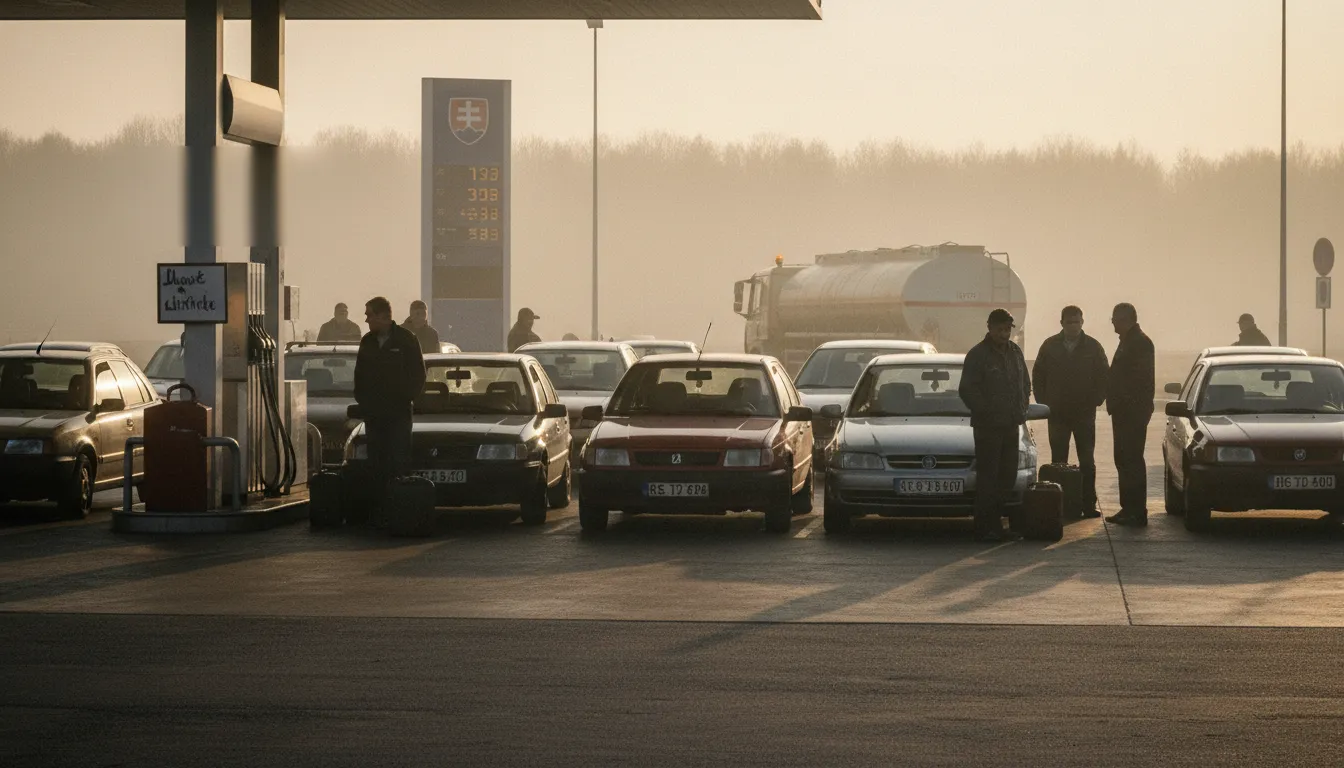
Starting Thursday, March 20th, Slovakia became the first European Union country to implement a direct fuel rationing system in response to the global oil crisis. The government of Robert Fico approved a 30-day decree limiting diesel sales at gas stations across the country.
Under the new rules, customers can only fill diesel directly into their vehicle's tank and a maximum of one 10-liter canister. The total amount cannot exceed €400 per vehicle, which, at current prices, corresponds to approximately 200 liters. Self-service gas stations that cannot enforce these limits must temporarily close.
Dual Pricing: Foreigners to Pay More
The most controversial measure is the introduction of a separate price for vehicles with foreign license plates. This price will be calculated as the average of diesel prices in Austria, the Czech Republic, and Poland – countries where fuel is significantly more expensive than in Slovakia. While Slovak motorists pay an average of €1.534 per liter, foreign drivers will pay approximately €1.826 per liter, according to Denník N.
The government has also banned the export of diesel from Slovakia. Exemptions from the restrictions apply to vehicles of the police, army, fire department, and emergency services.
Fuel Tourism Emptied Stations
The immediate trigger for the measures was massive fuel tourism from Poland. Prime Minister Fico stated at a press conference that "gas stations in northern Slovakia literally dried up because prices are significantly lower compared to Poland." The lower prices were a result of a voluntary price cap agreed upon by the government and the Slovnaft refinery.
Paradoxically, Poland itself faced a similar problem – German motorists were filling up with cheaper diesel there. This created a chain reaction of price arbitrage across Central Europe.
Global Crisis: Hormuz and Druzhba
The diesel shortage is due to a double supply shock. Firstly, the blockade of the Strait of Hormuz by Iran since the beginning of March 2026 has virtually halted maritime oil transport from the Persian Gulf. The price of Brent crude has jumped above $126 a barrel – the highest since 2022. Analysts are talking about the biggest supply disruption since the oil crisis in the 1970s.
Secondly, the Druzhba pipeline has been out of operation since January. Ukraine halted the transport of Russian oil after an alleged drone attack damaged a pumping station. Slovakia and Hungary claim that restoration is technically possible, but Kyiv refuses to cooperate. The government therefore declared a state of oil emergency in February and began supplying Slovnaft from strategic reserves.
Criticism and Concerns
Opposition MP Ivan Štefunko from the Progressive Slovakia movement criticized the measures. According to him, the government has mismanaged the crisis, and the restrictions could lead to further business closures. Some chains are reporting a 20 percent drop in supplies, which, combined with panic buying by domestic drivers, is further exacerbating the situation.
The decree is valid for 30 days with the possibility of extension. Slovakia is thus entering a period reminiscent of the 2022 energy crisis – but this time with much tougher regulatory tools.