How AI Inference Works—and Why It Costs More Than Training
Every time you ask an AI chatbot a question, you trigger AI inference. This explainer breaks down what inference is, how it differs from training, and why it quietly drives the largest compute bills in tech history.
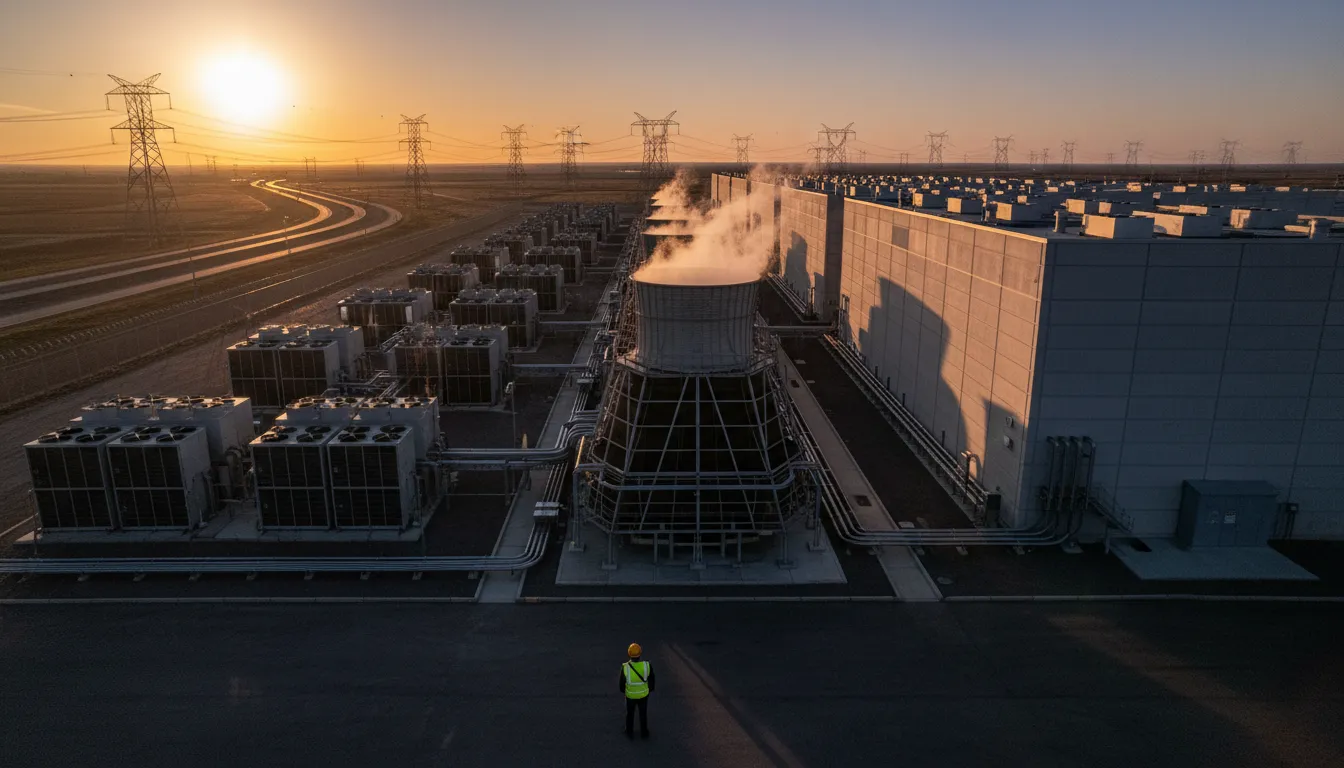
The Part of AI No One Talks About
When OpenAI trains a new version of GPT, the process runs for weeks on thousands of specialized processors, burning through enormous amounts of electricity and money. That training phase gets most of the headlines. But once the model is live and millions of people start chatting with it, a different — and far more expensive — phase begins: inference.
Inference is the process by which a trained AI model processes new input and produces an output. It happens every time you type a prompt, ask a voice assistant a question, or receive a product recommendation online. It is, in short, AI doing the thing it was built to do.
Training vs. Inference: Two Completely Different Jobs
To understand inference, it helps to contrast it with training. During training, a neural network learns from vast datasets by repeatedly adjusting billions of internal parameters — a computationally brutal process called backpropagation. The model sees examples, measures how wrong its guesses are, and nudges its weights in the right direction, over and over again, until it becomes useful.
Inference skips all of that. The model's weights are now fixed. When new data arrives — say, your typed question — it flows through the network in a single forward pass: layer by layer, the model uses those frozen weights to interpret context and generate a response. There is no learning, no gradient calculation, no weight update. Just rapid mathematical transformation from input to output.
According to NVIDIA, training is typically a one-time or infrequent event, while inference is continuous — running non-stop in production to serve real users at scale.
Why Inference Is Harder Than It Looks
Inference sounds simpler than training, and mathematically it is. But running inference at scale introduces a distinct set of engineering nightmares.
- Latency: Users expect responses in under a second. Every millisecond counts. A slow inference pipeline destroys the user experience.
- Throughput: A popular AI service may handle millions of simultaneous requests. The infrastructure must scale horizontally without collapsing.
- Cost per query: Each inference consumes compute. Multiply one cheap query by a billion daily users and the bill becomes staggering.
As Cloudflare explains, while a single inference is far less intensive than a training run, the cumulative cost of serving a widely used model can dwarf what it cost to build it in the first place.
The Staggering Economics
The numbers bear this out. According to analysis reported by PYMNTS, roughly 80% of AI compute budgets go to inference and only 20% to training. For OpenAI's GPT-4, the inference bill has been projected at approximately $2.3 billion annually — around 15 times its training cost. As RCR Tech notes, ChatGPT's inference cluster is more than ten times larger than the cluster used to train it.
The good news is that efficiency improvements are rapid. The cost to run a GPT-3.5-level model dropped by over 280-fold between late 2022 and late 2024, driven by algorithmic optimizations, better hardware utilization, and dedicated inference chips.
Dedicated Chips and Edge Inference
Training has long been dominated by general-purpose GPUs, because flexibility matters when research directions shift rapidly. Inference is different. Once a model architecture is stable, chip designers can build ASICs (application-specific integrated circuits) that hardwire the model's computational patterns directly into silicon — eliminating unnecessary circuits and maximizing performance per watt.
Beyond data centers, inference is increasingly moving to the edge — running directly on smartphones, cars, cameras, and industrial sensors. Edge inference cuts latency, reduces bandwidth costs, and keeps sensitive data local. Techniques like quantization (reducing the numerical precision of model weights) and pruning (removing redundant connections) shrink models enough to run on low-power devices without significant accuracy loss.
Why It Matters
Understanding inference helps demystify why AI is so expensive to deploy, why specialized chips are becoming a strategic asset, and why efficiency breakthroughs matter as much as raw model capability. Training produces intelligence; inference delivers it — billions of times a day, at a cost the industry is still learning to manage.