Valencia Train Strikes End After Fallas Festival Chaos
Strikes by the SEMAF union on Metrovalencia and the Alicante TRAM conclude today after two weeks of stoppages that severely disrupted public transport during the Fallas 2026 festival, reigniting the debate over minimum service levels during major tourist events.
Two Weeks of Stoppages During Fallas
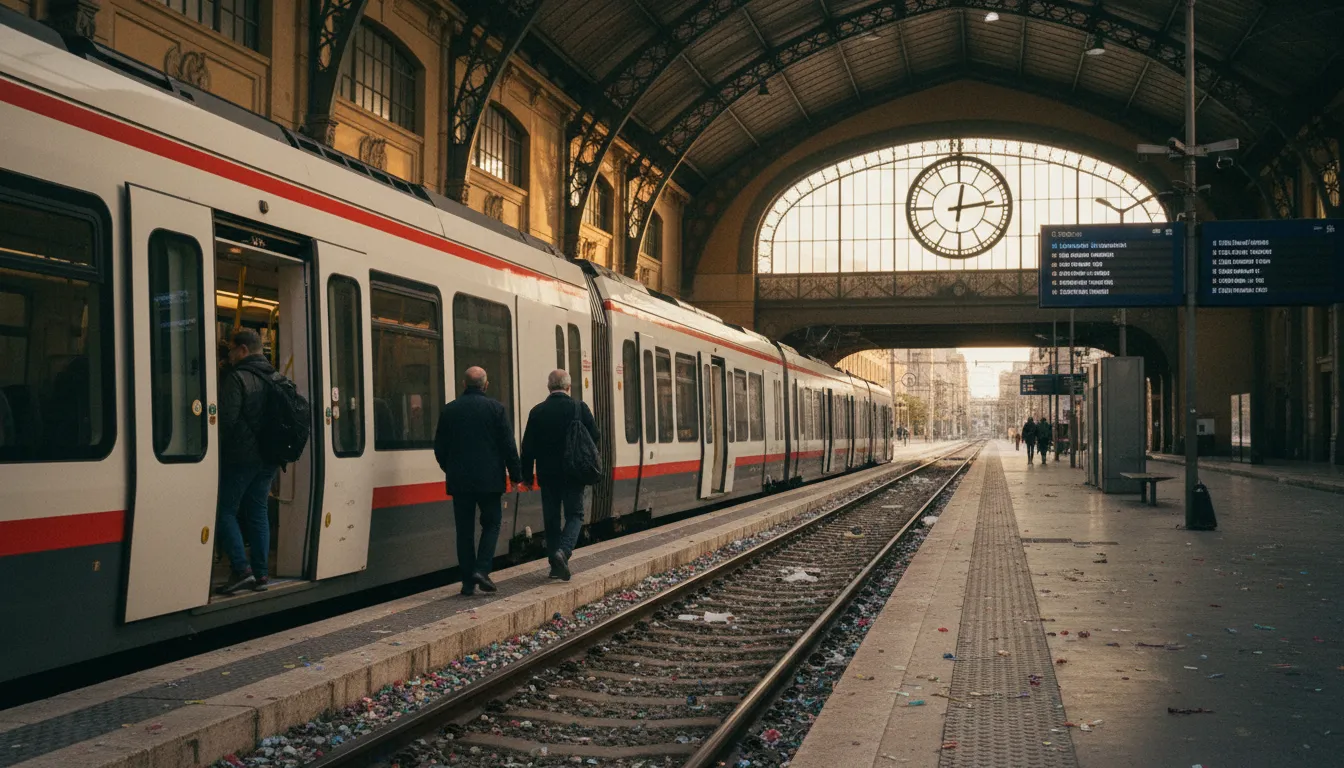
Strikes called by the Spanish Train Drivers and Assistants Union (SEMAF) on the Metrovalencia and Alicante TRAM services come to an end today, March 26, after 14 days of disruption that coincided with one of Spain's most important celebrations: the Fallas of Valencia.
The stoppages, which began on March 13, affected nine days on Metrovalencia (from March 13 to 19, plus March 24 and 26) and six on the Alicante TRAM (March 13, 16, 18, 20, 24 and 26). The strike times—from 7:00 to 10:00, from 13:00 to 16:00 and from 19:00 to 21:00—deliberately coincided with peak hours, including the popular midday mascletàs (firecracker displays).
Workplace Safety: The Underlying Reason
SEMAF justified the action "in defense of safety and organizational justice," after claiming that all avenues of negotiation with Ferrocarrils de la Generalitat Valenciana (FGV) had been exhausted. Key demands include improvements to infrastructure—poor signage, inadequate lighting in tunnels and transit areas, obsolete rolling stock—and protocols for exceptional situations, such as those highlighted by the DANA storm floods of October 2024.
The union also claimed that external contractors installed new traffic control systems after the floods, but that FGV staff did not receive adequate training to operate them. According to union sources, FGV management "has not seen fit to attempt dialogue" in any available forum.
Impact During Fallas
The timing of the stoppages was no accident. Metrovalencia had planned a special operation of 168 hours of uninterrupted service during the Fallas week, with the expectation of exceeding three million journeys. The minimum services mandated by the General Directorate of Labor were set at 80% between March 15 and 19, and at 75% for the remaining days.
Despite these minimums, the Xàtiva and Colón stations—the closest to the Fallas center—remained completely closed during the mascletà hours between March 14 and 19, forcing thousands of visitors to resort to alternatives such as:
- The EMT bus network, with special routes for Fallas
- The Valenbisi shared bicycle system
- Taxis and private transport services, overwhelmed by traffic
The Debate Over Minimum Services
The experience has revived a recurring discussion in Spain: the need to establish stricter minimum services during events with large tourist crowds. FGV downplayed the impact, noting that the first days of mobilization "took place without notable incidents and with reduced participation" among the workers called to strike.
However, the conflict leaves open questions. SEMAF has not ruled out further mobilizations if its safety demands are not met, while the precedent of a rail strike during Fallas—an event that generates hundreds of millions of euros for the Valencian economy—marks a turning point in the relationship between the right to strike and major tourist events in Spain.