Younger Dryas: Volcanoes, Not a Comet, to Blame, Study Finds
A study published in PLOS One demonstrates that a 12,800-year-old platinum spike in Greenland ice cores originated from Icelandic volcanic eruptions, not an extraterrestrial impact, challenging the prevailing hypothesis about the abrupt Younger Dryas cooling.
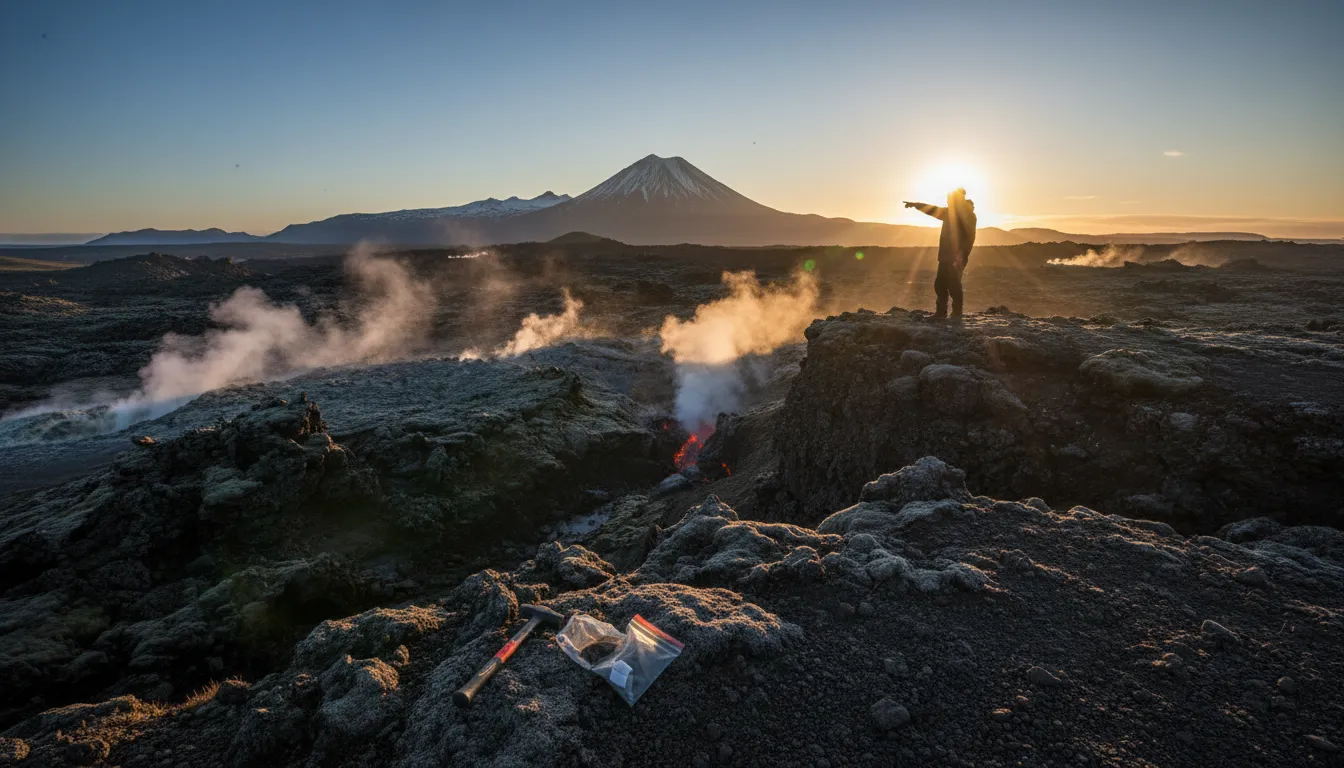
A 12,800-Year-Old Mystery Finally Solved
For over a decade, an anomalous concentration of platinum discovered in Greenland ice cores has fueled one of the most heated controversies in paleoclimatology. This anomaly, dated to approximately 12,800 years ago, coincided with the onset of the Younger Dryas — a period of abrupt cooling during which temperatures in the Northern Hemisphere plummeted by about 15°C for nearly 1,200 years. Many researchers saw this as evidence of a comet or asteroid impact.
A study published in the journal PLOS One by an international team led by Charlotte E. Green and James U. L. Baldini, Professor of Earth Sciences at Durham University, overturns this hypothesis. According to their work, the platinum originates not from space, but from Icelandic submarine volcanic eruptions.
A Platinum Spike That Arrived Too Late
The most decisive argument against the impact hypothesis is chronological. Analyses reveal that the platinum spike appeared approximately 45 years after the start of the Younger Dryas cooling — far too late to have triggered it. Furthermore, the elevated concentrations persisted for 14 years, a duration incompatible with an instantaneous impact, but perfectly consistent with prolonged volcanic activity.
The team also noted low levels of iridium in the ice cores. Meteorites generally contain significant amounts of this element, further weakening the extraterrestrial theory.
Laacher See Ruled Out, Iceland Identified
To identify the volcanic source, the researchers analyzed 17 pumice samples from the eruption of Laacher See, a German volcano that erupted approximately 13,000 years ago. The result: platinum concentrations were "barely detectable, or even below detection limits," eliminating this volcano as a possible source.
The team then turned to Icelandic subglacial or submarine fissure eruptions. Volcanic gas condensates produced during these eruptions exhibit a platinum group element geochemistry that closely matches the chemical signature found in the Greenland ice. This mechanism is also corroborated by historical precedents: the eruptions of Katla (8th century) and Eldgjá (10th century) deposited measurable heavy metals in Greenland ice.
Major Implications for Climatology
If the platinum does not indicate a cosmic impact, what triggered the Younger Dryas? The researchers point out that a massive spike in volcanic sulfate has been identified precisely at the beginning of this cooling period. The injection of sulfur into the stratosphere by major eruptions could have triggered a chain reaction of cooling, amplified by the particular climate sensitivity of this transitional period between glacial and interglacial conditions.
For French research, these results reinforce the importance of glaciological programs conducted in particular by the French Polar Institute Paul-Émile Victor in the Arctic. Understanding the mechanisms of rapid cooling remains crucial for refining predictive models in the face of current climate change.
As James Baldini summarizes, this discovery reminds us that the answers to major climate enigmas are sometimes found beneath our feet — and not in the stars.


