Ryanair Cuts 1.2 Million Seats in Regional Spain
Ryanair is closing its base in Santiago de Compostela, eliminating all flights to Asturias and Vigo, and reducing capacity at other regional Spanish airports for the summer of 2026, attributing the decision to Aena's increased airport fees.
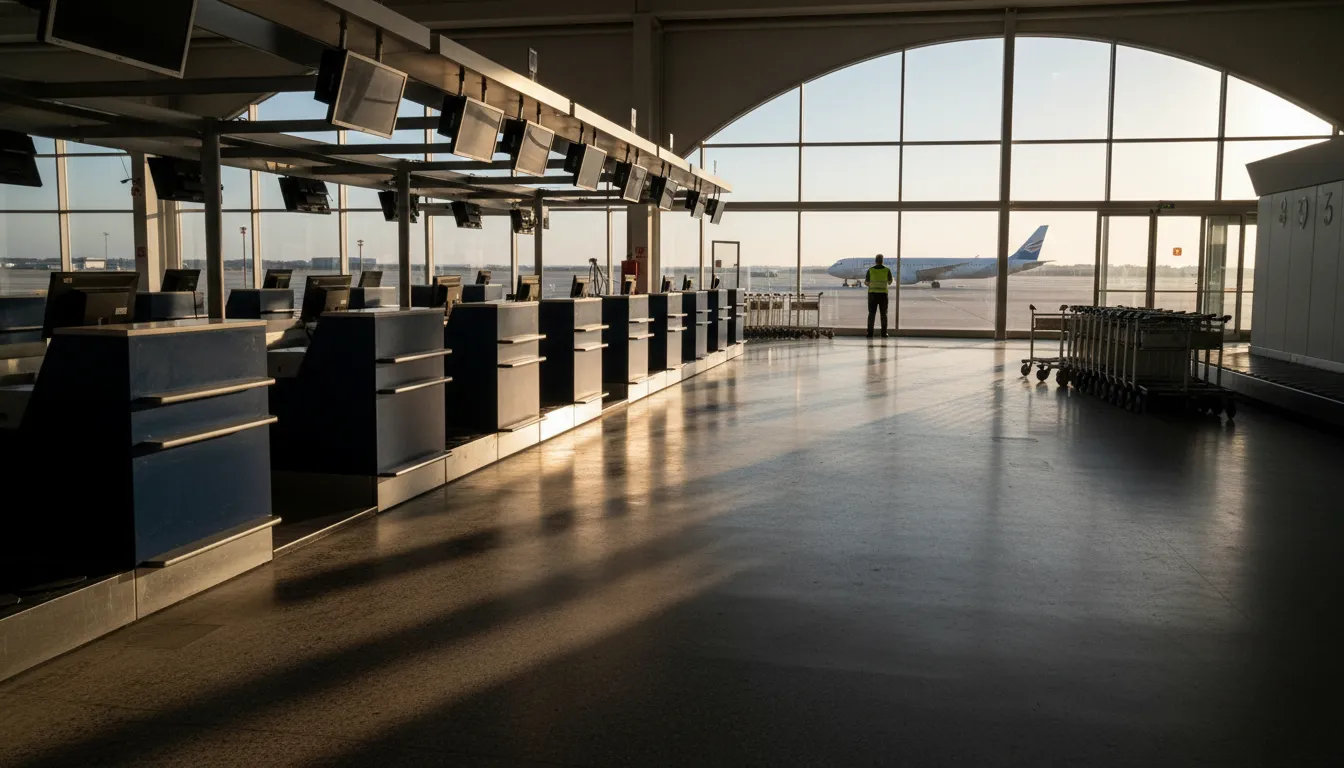
The Largest Capacity Reduction in Peripheral Spain
Ryanair has confirmed a cut of 1.2 million seats at regional Spanish airports for the summer season of 2026, representing a 10% reduction compared to the previous year. This measure adds to the million seats already eliminated during the winter of 2025-2026, bringing the total accumulated to nearly three million lost seats in regional Spain.
The Irish airline has definitively closed its operations base in Santiago de Compostela, where it maintained two aircraft, and has eliminated all of its flights to the airports of Asturias and Vigo. In addition, it has significantly reduced capacity in Santander (38% less), Zaragoza (45% less), and eliminated connections with Tenerife North.
Aena and Fees: The Center of the Dispute
Ryanair attributes the decision to the increase in airport fees imposed by Aena, the state airport operator that operates as a monopoly. For 2026, Aena will apply a 6.5% increase, placing the average fee at 11.03 euros per passenger, a level that the airline considers "unjustifiable" at regional airports with low occupancy.
According to Ryanair's official statement, the company presented the Spanish government and Aena with two growth plans that would have allowed passenger traffic to increase by 40% to reach 77 million annually by 2030, but both proposals were rejected. The airline also criticizes the fines for hand luggage promoted by Consumer Affairs Minister Pablo Bustinduy, which it describes as "illegal."
Impact on Regional Connectivity
The closure of the Santiago base implies the withdrawal of two aircraft and the loss of an investment valued at 200 million dollars for Galicia. In the Galician capital, only five routes with reduced frequencies will survive: Tenerife South, Valencia, Lanzarote, London, and Seville. Cities such as Vigo, Asturias, Jerez, and Valladolid are left without any connections operated by Ryanair.
The impact on the air connectivity of peripheral regions is of particular concern to the affected communities. Hundreds of thousands of passengers depend on these low-cost routes to travel both within Spain and to European destinations.
Ryanair Redirects its Capacity
The airline has announced that it will transfer the aircraft withdrawn from regional Spanish airports to markets it considers more competitive. The capacity will be reallocated to major airports such as Madrid, Barcelona, Palma de Mallorca, and Malaga, as well as to international destinations in Italy, Morocco, Croatia, Albania, Hungary, and Sweden.
This strategy is not exclusive to Spain: Ryanair has announced similar cuts in Portugal, Germany, France, and Belgium, always citing the increase in airport fees and environmental taxes as a determining factor.
Aena Responds: "Blackmail" and "Dishonesty"
The president of Aena, Maurici Lucena, has described Ryanair's communication strategy as an exercise in "dishonesty" and "blackmail" aimed at obtaining economic advantages. For his part, Executive Vice President Javier Marín has argued that the Spanish airport system cannot be designed "based on the short-term criteria" of a single company, recognizing the airline's operational criteria as "legitimate," but emphasizing the strategic importance of the national airport network.
The dispute between Ryanair and Aena leaves an uncomfortable question at the center of the debate: who guarantees the air connectivity of the regions that need it most?